


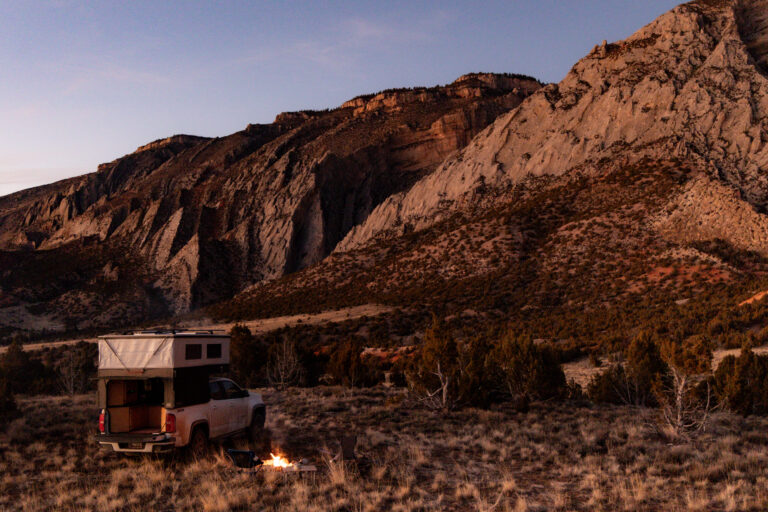
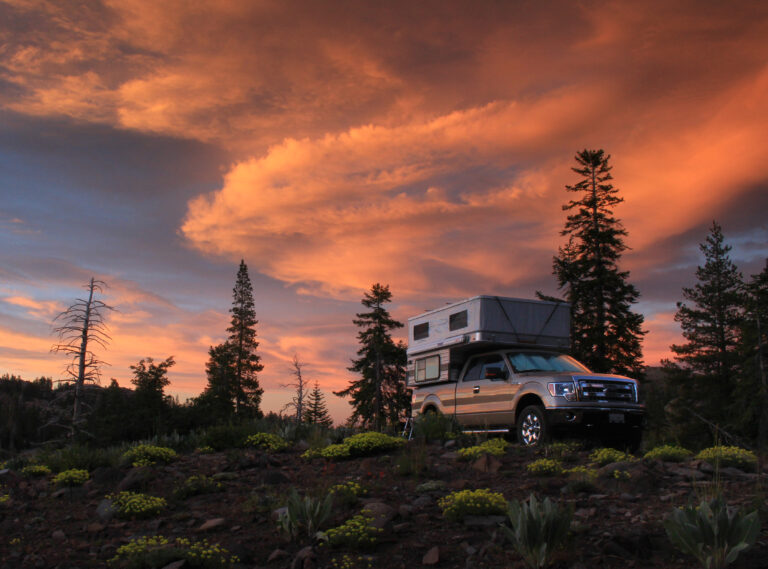
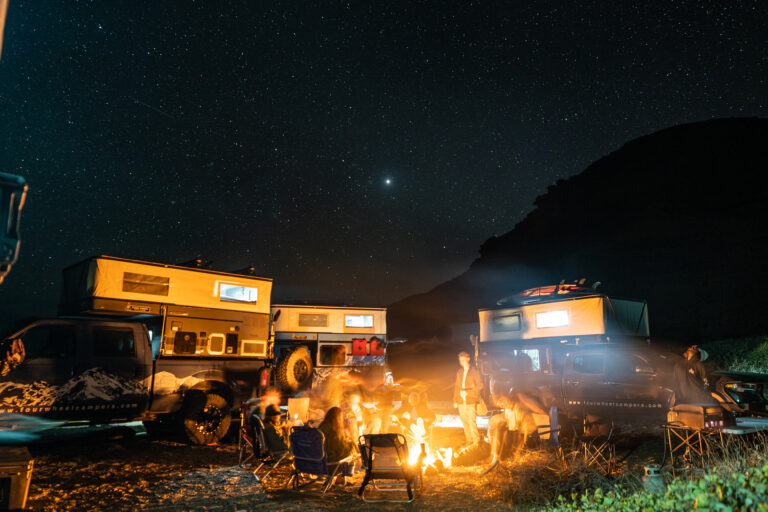
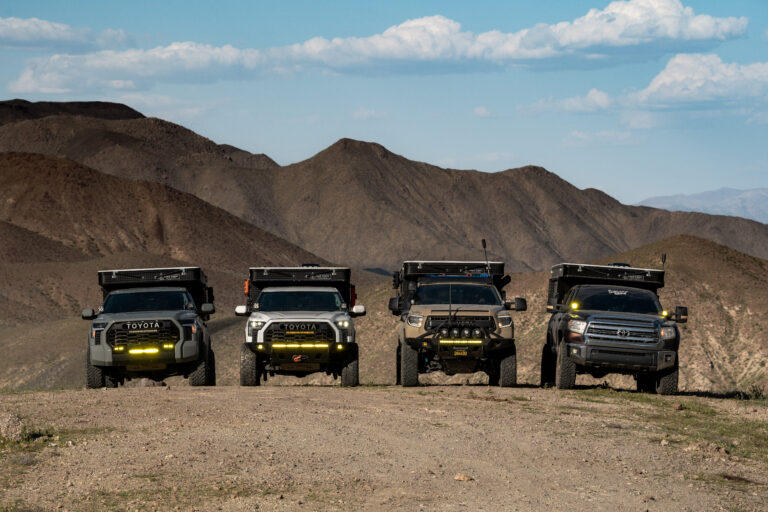


The Ultimate Truck Camper Setups for Hunters
Published Date: October 16, 2026
By Shalee
There’s a certain kind of trip where comfort matters less than capability. You’re up before sunrise, in and out of the truck all day, muddy boots, wet gear, maybe a cooler full of fish or a quarter of elk riding in the bed on the way home. The trip lasts anywhere from days to weeks. Hunting and fishing trips put different demands on a rig than a weekend at a scenic overlook, and the camper that works for one doesn’t always work for the other.
We’ve talked to enough hunters and anglers over the years to know what actually matters out there. Here’s how to think through a truck camper setup built for the field, not just the campground.
Why a Truck Camper Makes Sense for Hunters (and Anglers!)
A truck camper solves a problem that tents and trailers both struggle with: it lets you camp wherever your truck can go, without towing anything behind you. That matters a lot when you’re chasing animals or fish into areas where a trailer simply can’t follow, down a rough two track, across a river crossing, or into a tight forest road that dead-ends at exactly the spot you wanted to be. And the more you get out there, the fewer people! More expansive space for all the outdoor recreation you can imagine.
Here are just a few major benefits of having a truck camper during hunting & angler season.
1. Weight Matters More Than You Think
Hunting and fishing trips tend to load a truck down fast. Between coolers, decoys, firearms and ammunition, fishing gear, waders, game bags, and whatever you’re bringing home, you’re adding real weight on top of your camper before you even factor in water, propane, and your usual gear.
This is exactly where a lightweight pop up camper earns its keep! Our campers run from around 375 lbs for the Project M topper up to 2,000 lbs for our largest flatbed models, which leaves more payload available for gear, game, and passengers compared to a heavy hard-sided camper. If you’re already running a loaded truck during hunting or fishing season, that payload margin is the difference between a truck that handles the way it should and one that’s maxed out before you’ve even loaded the cooler.
Before any season starts, it’s worth running the numbers on your specific setup. Our guide on what is the weight of a pop up camper walks through dry weight versus real loaded weight, and our payload capacity guide shows you exactly how to read your truck’s rating so you’re not guessing when the bed is full of gear.
2. Keep Your Truck Bed Working for You
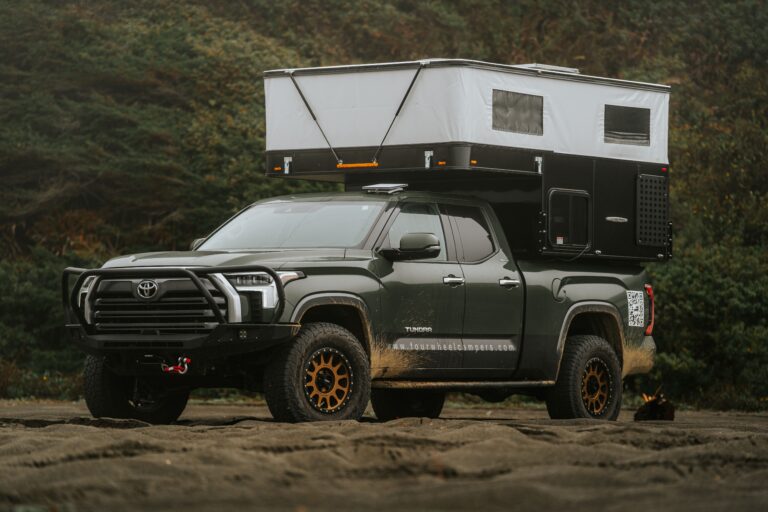
A lot of hunters and anglers don’t want to give up their truck bed just to have a camper. That’s a real tradeoff worth thinking through before you buy, and it’s exactly why our Project M topper has become such a popular choice. It mounts to your bed rails rather than sliding into the bed itself, which means you keep full use of the bed underneath for a cooler, dog box, gear totes, or a harvested animal, while still getting a pop up roof, standing room, and a real place to sleep above it all.
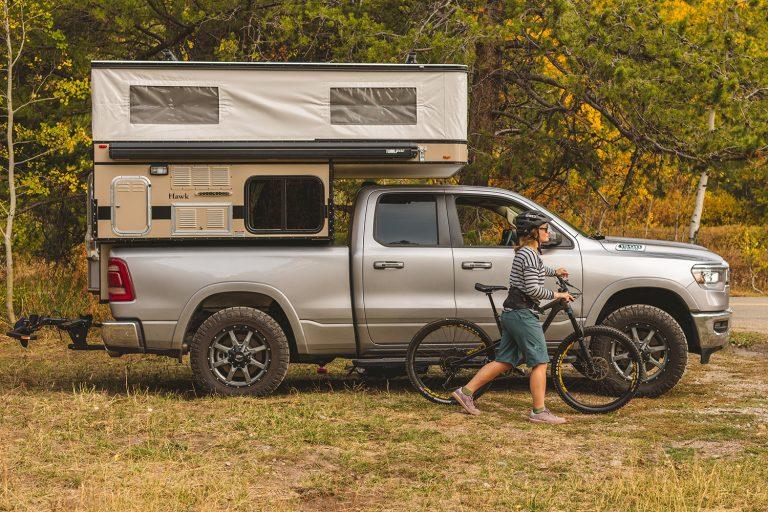
If you’d rather have a fully self-contained setup with a built-in kitchen and dedicated sleeping area separate from your gear, our slide-in models, the Swift and Fleet for midsize trucks and the Hawk and Grandby for full size trucks, give you that separation. It really comes down to whether you’d rather maximize bed space or maximize built in comfort.
3. Less Pack-Out Mileage
Anyone who’s packed out a quarter of elk or a full deer over a mile of rough terrain knows exactly how much that last stretch costs you in time, energy, and daylight. One of the most underrated advantages of a Four Wheel Camper is how much closer it can actually get you to where the harvest happens in the first place.
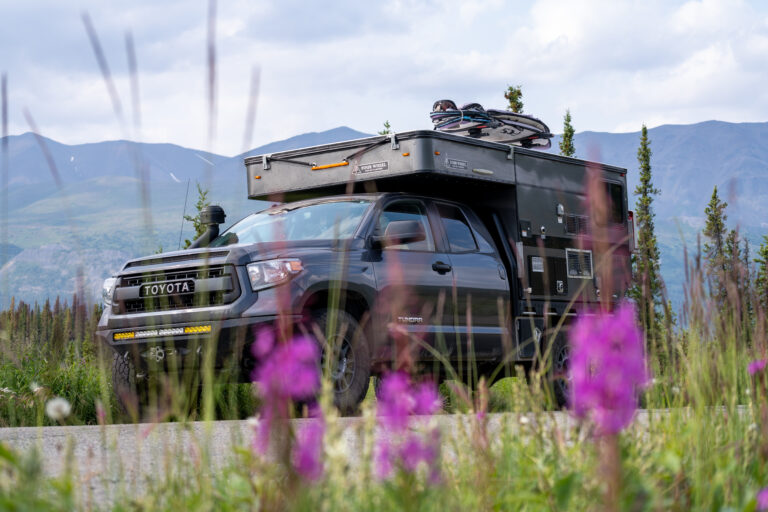
Our low profile, lightweight pop up design keeps your truck driving the way it’s meant to, even fully loaded. Less weight up high means a lower center of gravity, better approach and departure angles, and a rig that handles washouts, rutted two tracks, and steep forest roads with real confidence instead of bottoming out or struggling for traction. A heavy hard side camper, by comparison, often forces hunters to park miles earlier than they’d like, simply because the truck can’t safely handle the terrain any further in.
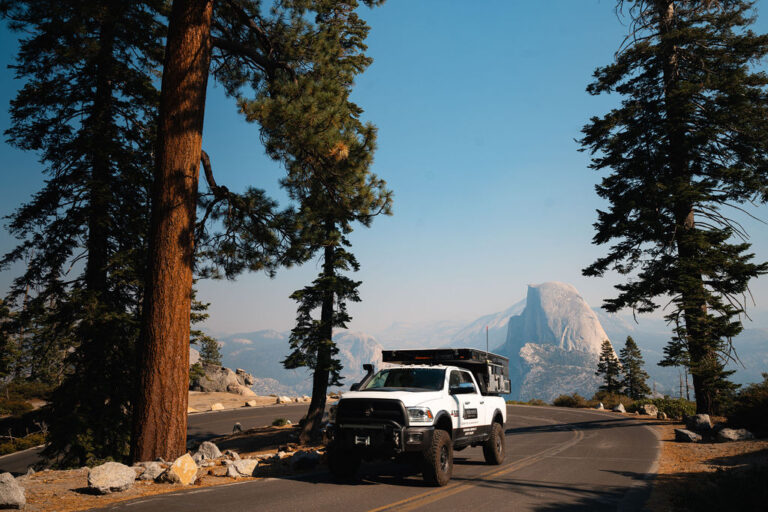
The honest truth is that the best hunting and fishing spots are rarely the easiest to reach. Dispersed camping deep into the wilderness requires 4WD through remote terrain. Our guide on the seven best states for dispersed camping covers some of the best public land states for exactly this kind of access, and a lightweight, low profile camper is what makes actually using that access realistic rather than theoretical.
4. Stealth and Low Profile Matter More Than People Realize
Our pop up design isn’t just about weight savings, it genuinely helps you blend in. A low profile camper with the roof down doesn’t stick up above the tree line or catch light the way a tall hard side camper does, which matters if you’re parked near a hunting area and don’t want your rig to be the first thing every passing vehicle notices. A lower center of gravity that keeps your truck more stable on the rough, often muddy or rutted roads that lead to the best hunting and fishing spots.

5. Setting Up for Cold Weather Seasons
A lot of hunting season, especially big game, falls right in the coldest stretch of fall and into winter. If you’re planning to camp through cold mornings and colder nights, a couple of upgrades make a real difference. Our quilted thermal lining adds real insulation to the pop up walls, and an added furnace keeps the inside of the camper genuinely warm rather than just tolerable. We go deeper on both of these, along with water system management in freezing temperatures, in our guide on how to winterize your truck camper.
A full size or flatbed model, like the Hawk Flatbed or Grandby Flatbed, gives you more interior space to dry out wet gear, warm up after a cold morning sit, and process the day’s catch or harvest without everything piling up in one small area. If you’re spending extended time in the field during cold weather season, that extra space tends to matter more than people expect going in.
6. Storage for Gear That Doesn’t Fit Neatly
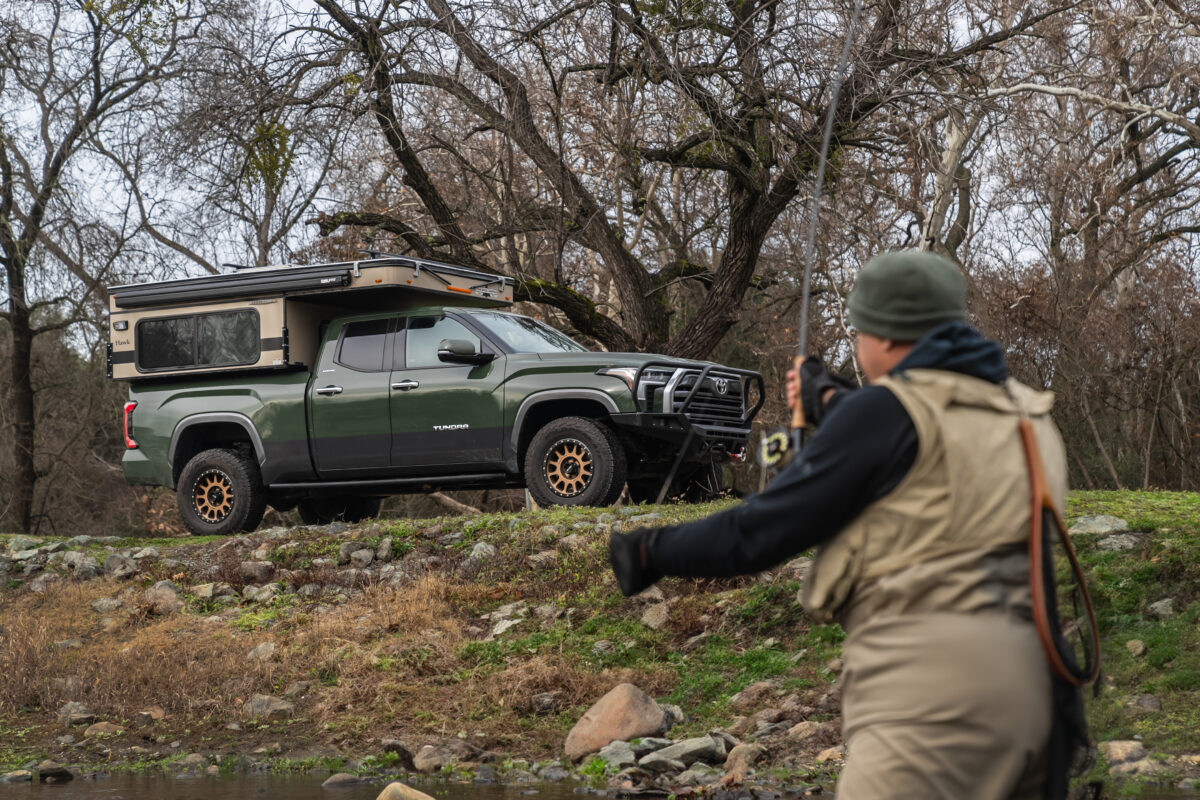
Hunting and fishing gear is rarely tidy. Rods, decoys, waders, firearms, tackle, game bags, and processing tools all need somewhere to live that keeps them secure, dry, and out of the way of daily living space. Check out our special edition ORVIS special edition truck camper, which was created by anglers, for anglers.
A few things worth building into your setup:
- Exterior gear tracks and roof racks for mounting coolers, traction boards, or bulky items outside the living space entirely
- Interior gear tracks for securing rifles, rods, or bags so they’re not sliding around on rough roads
- Flatbed storage boxes, if you’re running one of our flatbed models, which give you dedicated exterior storage separate from your interior living space
- A durable, washable interior that can handle muddy boots and wet gear without turning into a maintenance headache

Building the Right Rig for Your Season
There’s no single perfect setup for every hunter or angler, it depends on your truck, your target species, your season, and how much you value bed space versus built in comfort. A midsize truck with a Project M topper might be the right call for a solo backcountry elk hunt where weight and stealth matter most. A full size truck with a Hawk or Grandby might make more sense for a multi-week fishing trip where you want a real kitchen and a comfortable place to process the day’s catch.
If you’re not sure which setup fits your truck and your plans, our truck selector tool will match you with compatible models based on your exact truck, and our full lineup of camper models lets you compare specs side by side. Whatever you’re chasing this season, the right rig should get you closer to it, not slow you down.
Explore our Special Edition ORVIS Truck Camper