






Tips for Road Tripping With Pets
Published Date: July 24, 2025
By Shalee
At Four Wheel Campers, we know that adventure often includes our favorite co-pilots—our pets! Whether it’s a pup with its head out the window or a cat curled up in the camper, our furry companions make road trips all that more special. In fact, many pets love the open road just as much, if not more, than we do.
Bringing pets along for the journey is something we fully support. If you’re planning an adventure and want to make sure your four-legged family members are part of the fun, here are six tips straight from seasoned Four Wheel Camper pet owners. And a showcase of some of our pets that join along on adventures in the FWC family!
Six Tips for Road Tripping With Pets
1. Check Pet Rules & Regulations at Your Destinations
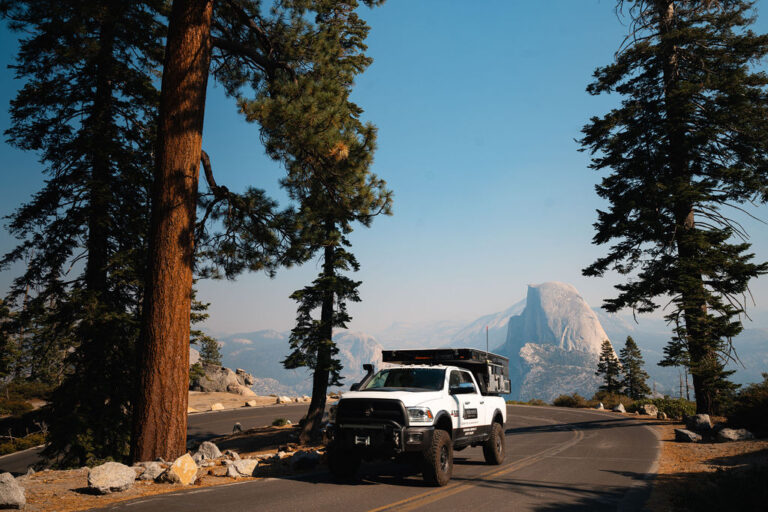
Before you hit the road, research the pet policies of your planned stops. Many national parks—including Yosemite, Yellowstone, and Zion—have strict rules about pets to protect local wildlife and preserve natural areas. These regulations are in place to support Leave No Trace principles and maintain safety for both your pets and the environment.
This applies not only to national parks, but also to state parks, monuments, and city-run recreation areas. Be sure to read up on pet-specific rules before you arrive.
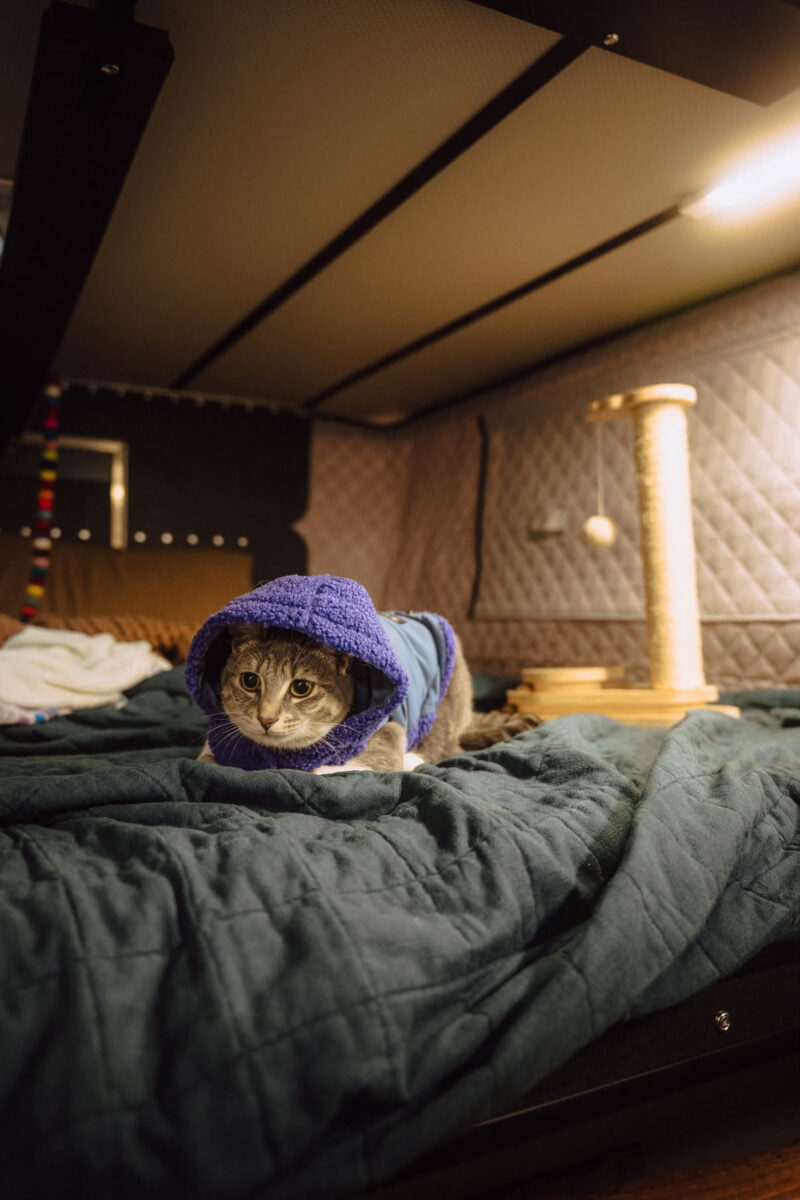
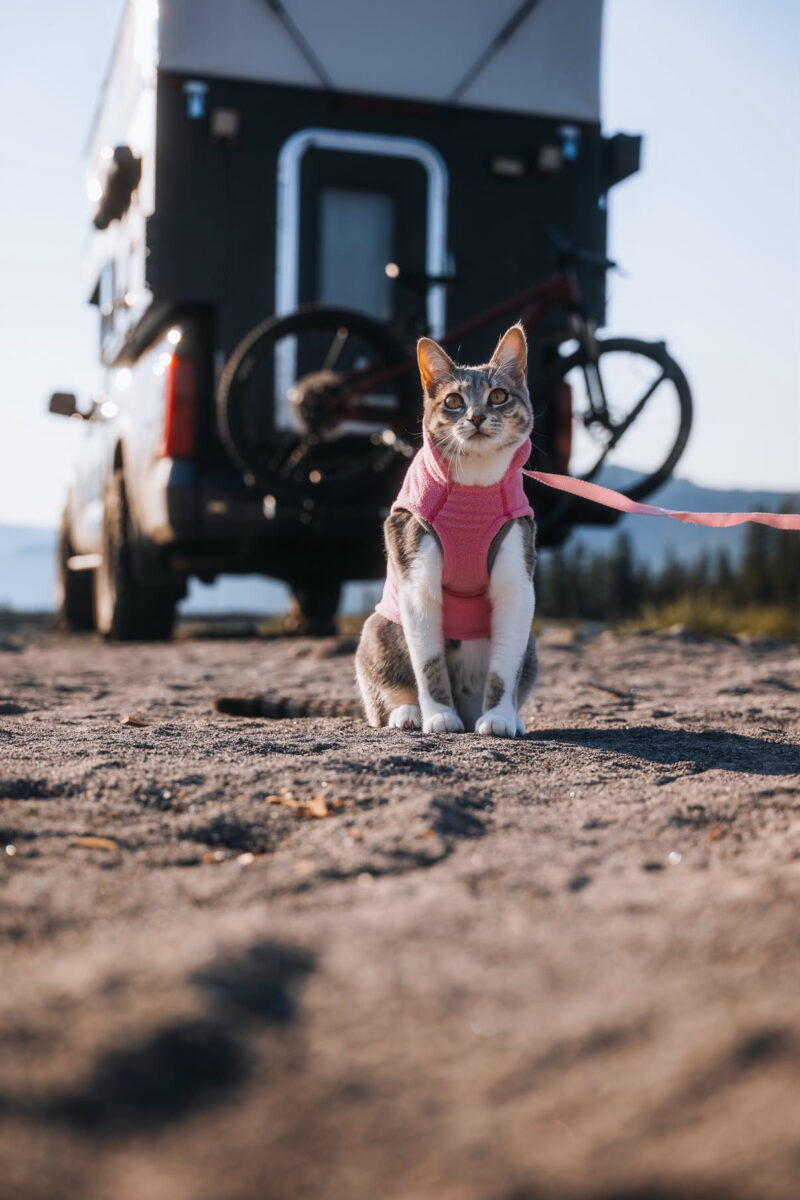
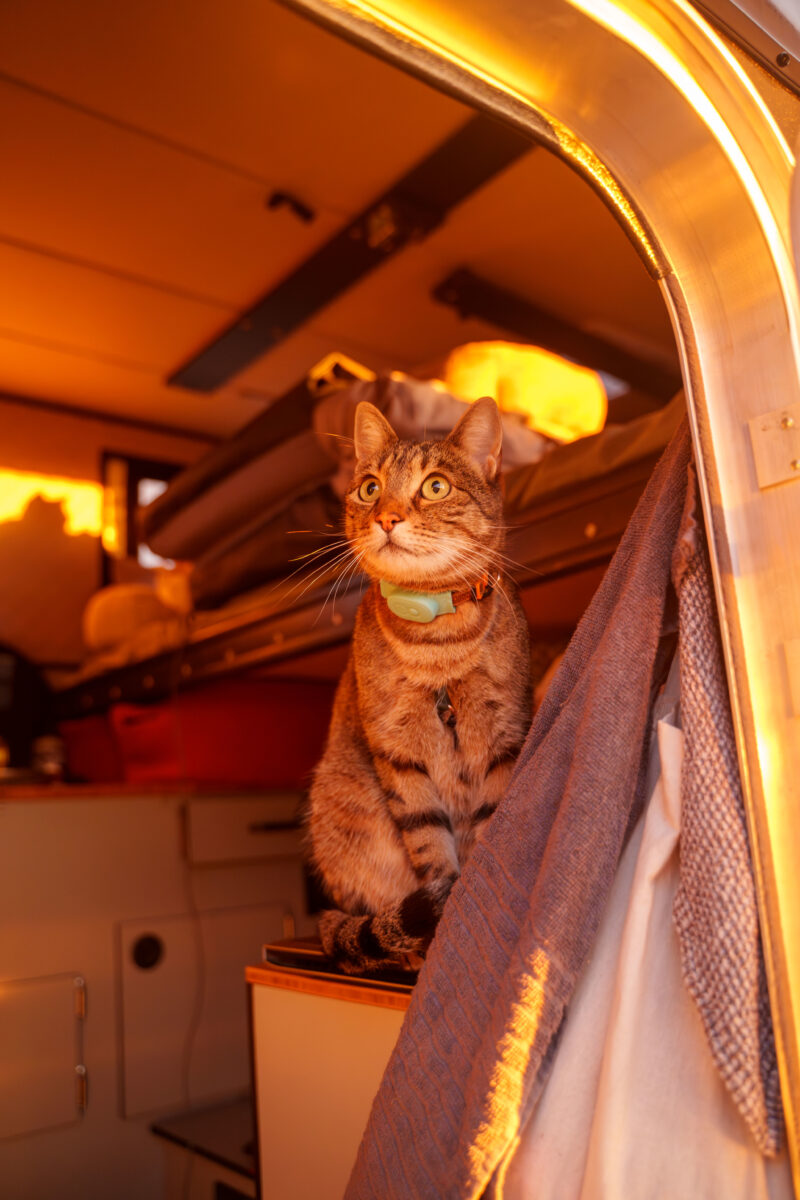
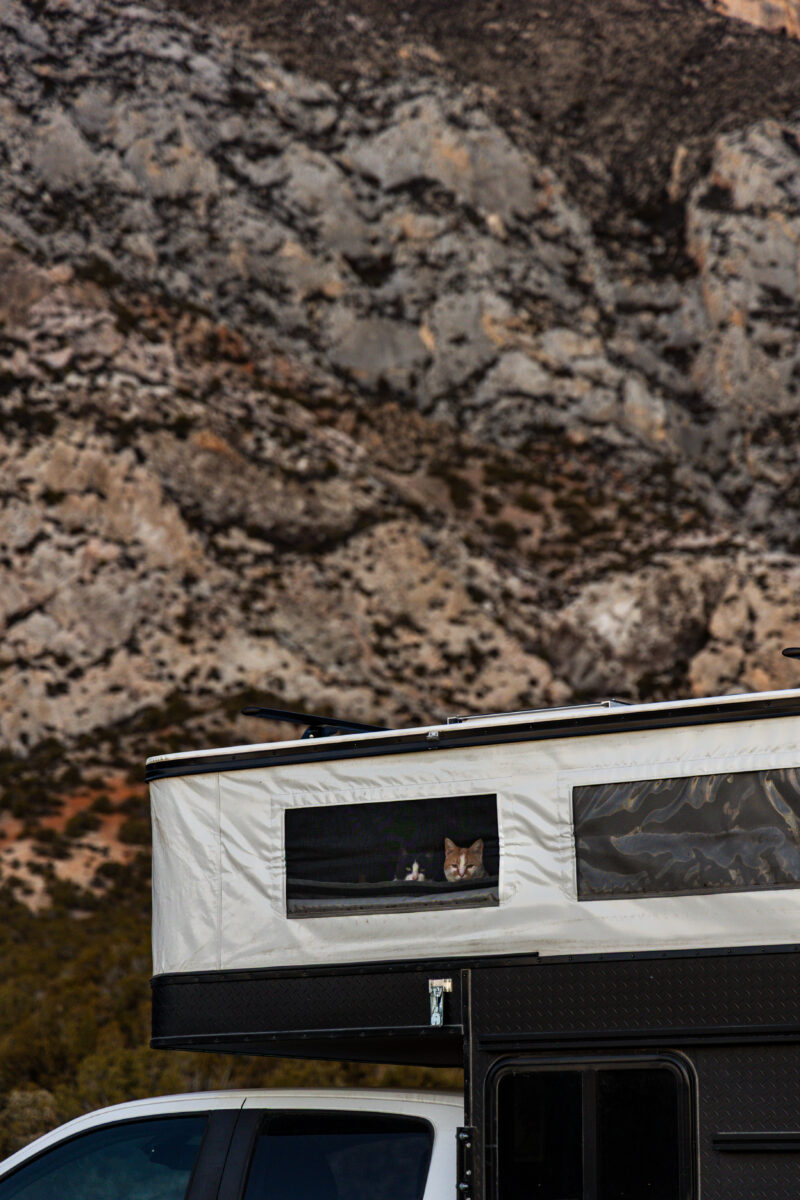
Meet Michael, Shelby, and Luna the Cat.
2. Pay Attention to Weather—Especially in the Heat
Hot weather can quickly become dangerous for pets, especially in enclosed vehicles. Standard cars and vans heat up fast, making it unsafe to leave pets inside above 70°F.
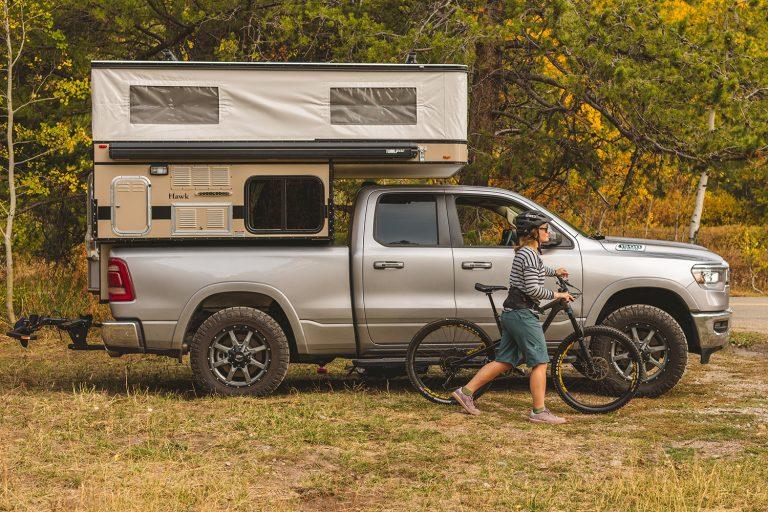
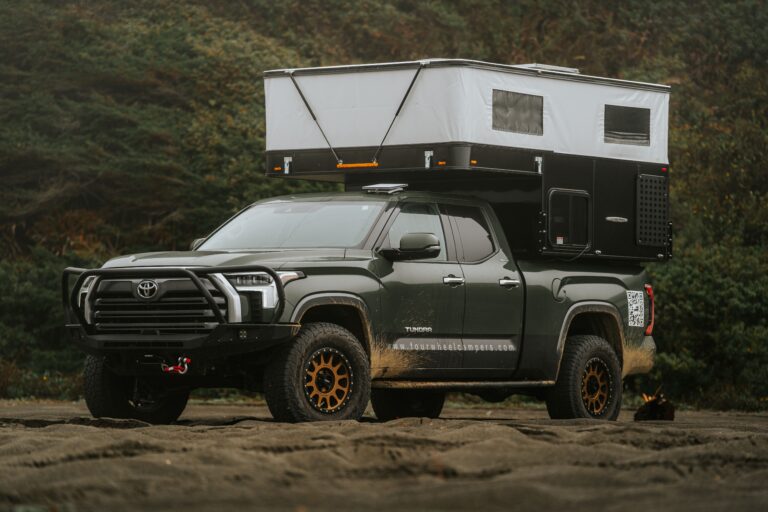
With a Four Wheel Camper, you have more flexibility. When the camper is popped up, four upper windows, a lower window, and optional dual ceiling fans allow for excellent ventilation. This setup keeps your camper cooler and more comfortable for longer periods—perfect for pets resting while you hike or explore nearby. Do you have any stats about temperature regulation within the campers we could add here?
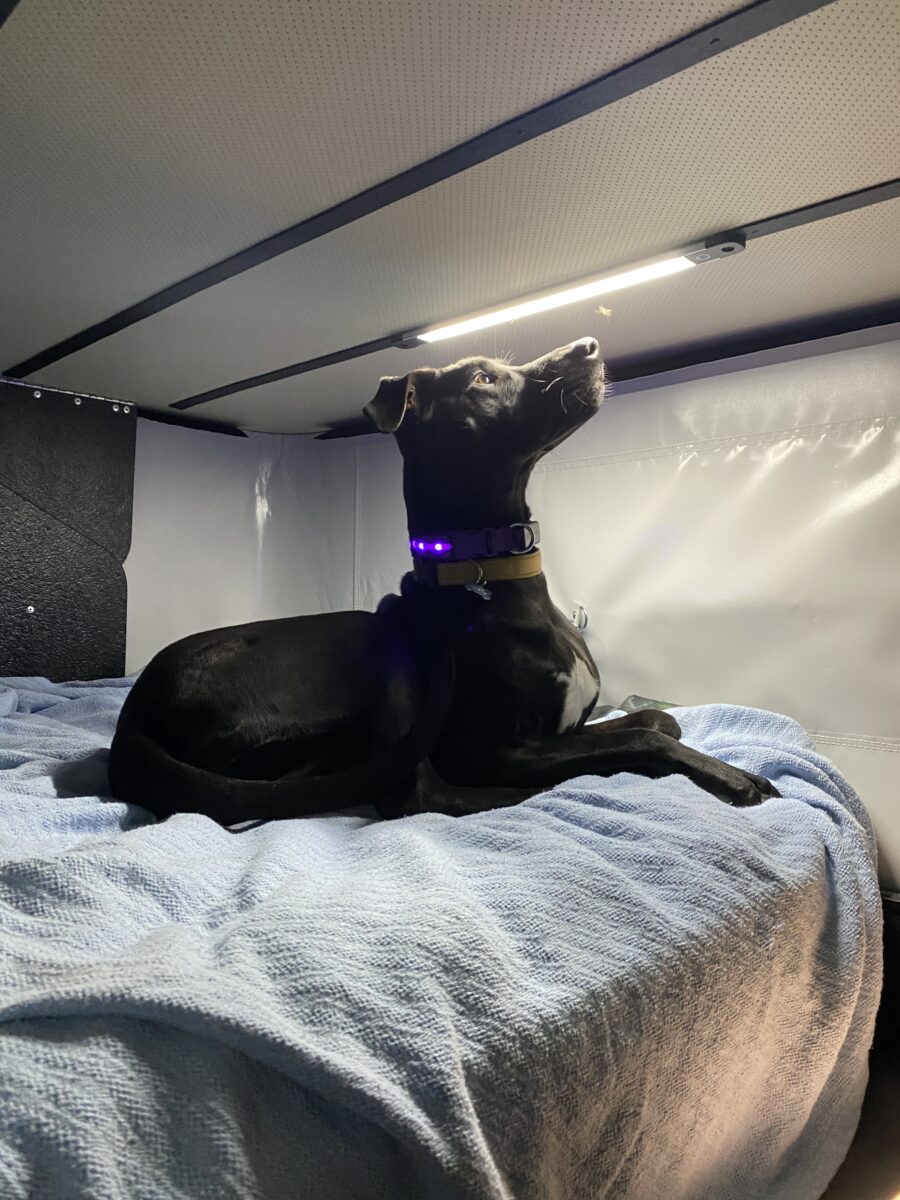
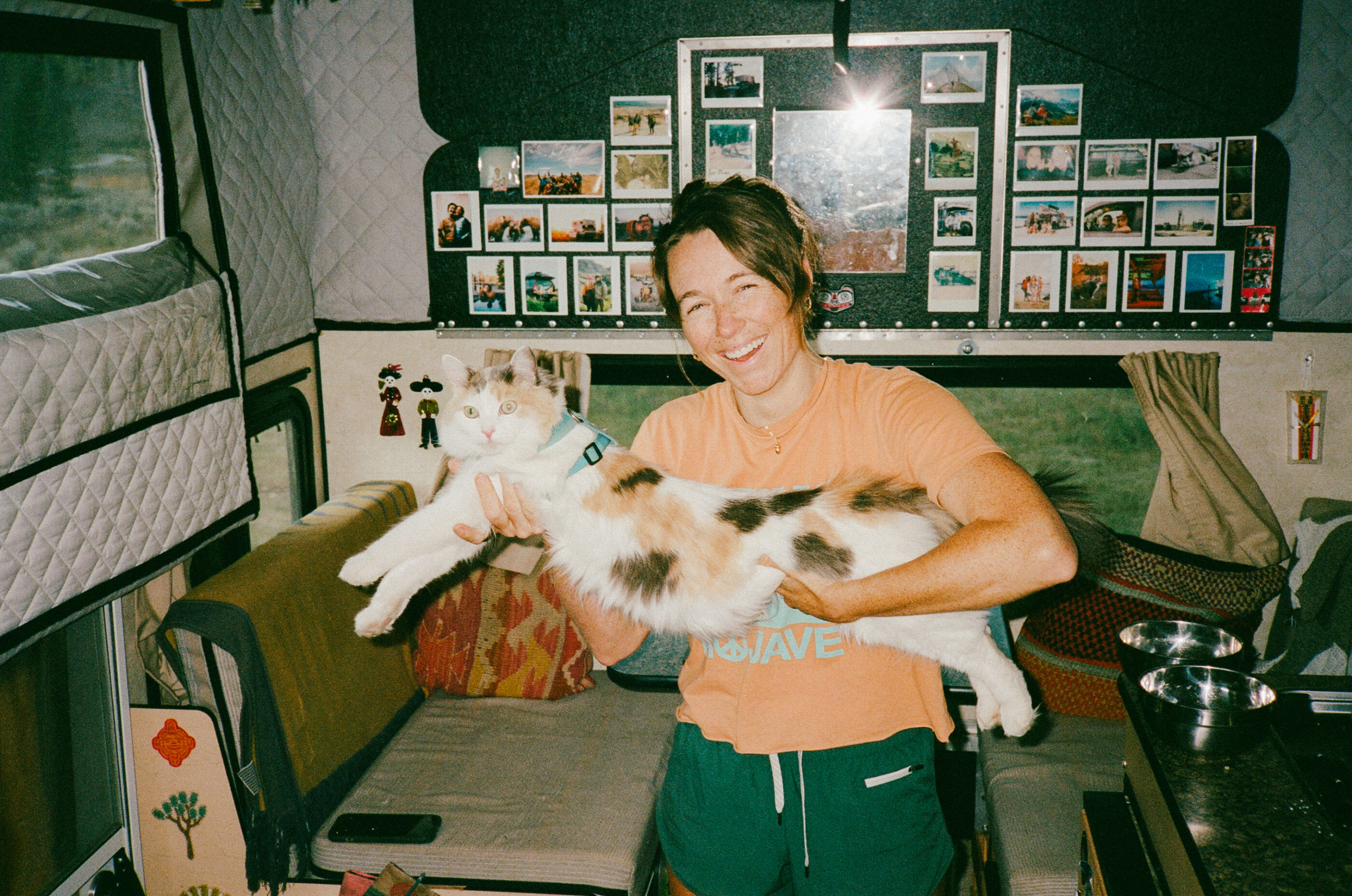
Mojave enjoying adventures in the Project M
3. Scout Pet-Friendly Campsites Ahead of Time
Whether you’re planning to stay in campgrounds or boondock in national forests, do some research ahead of time. For campsites, look into how spread out the sites are, whether they offer shade, and what amenities are available.
If you’re opting for dispersed camping, use apps like iOverlander and Sekr to find campsites with photos and user reviews. These tools can help you understand what the terrain looks like and if it looks like a good fit for your pet.

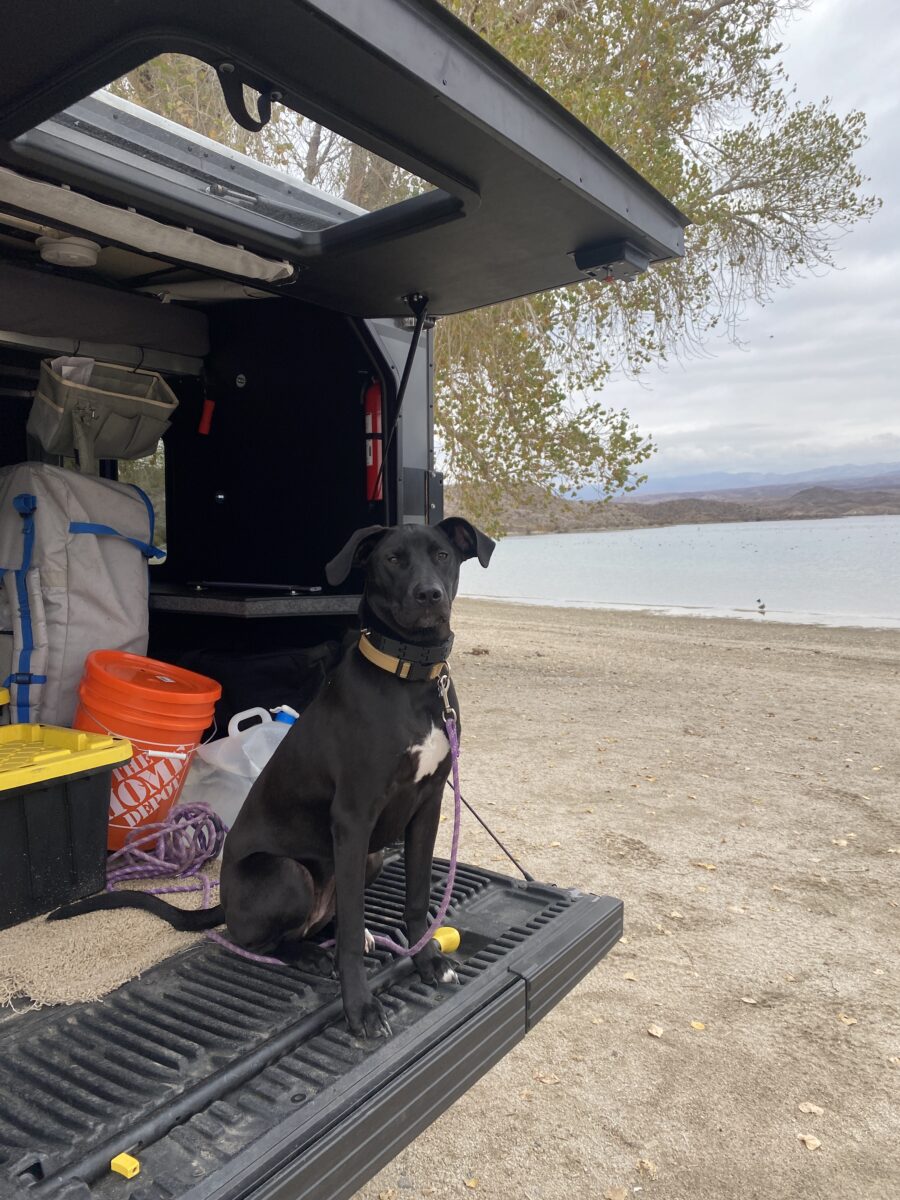
Penny enjoying a peaceful afternoon at camp
4. Tailor Your Trip to Your Type of Pet
From dogs and cats to the occasional hamster, our community has traveled with all kinds of animals. Each pet comes with its own set of needs, so it’s important to consider how yours will fit into your itinerary.
Ask yourself:
- How long will you be away from the camper during hikes or excursions?
- Does your pet need shade, stimulation, or a quiet place to nap?
- Will they be joining you on the trail, or hanging back in the camper?
- What kind of traveler are they? Anxious? Active? Chill?
Adjust your schedule and gear accordingly to make the trip enjoyable for everyone—humans and pets alike.
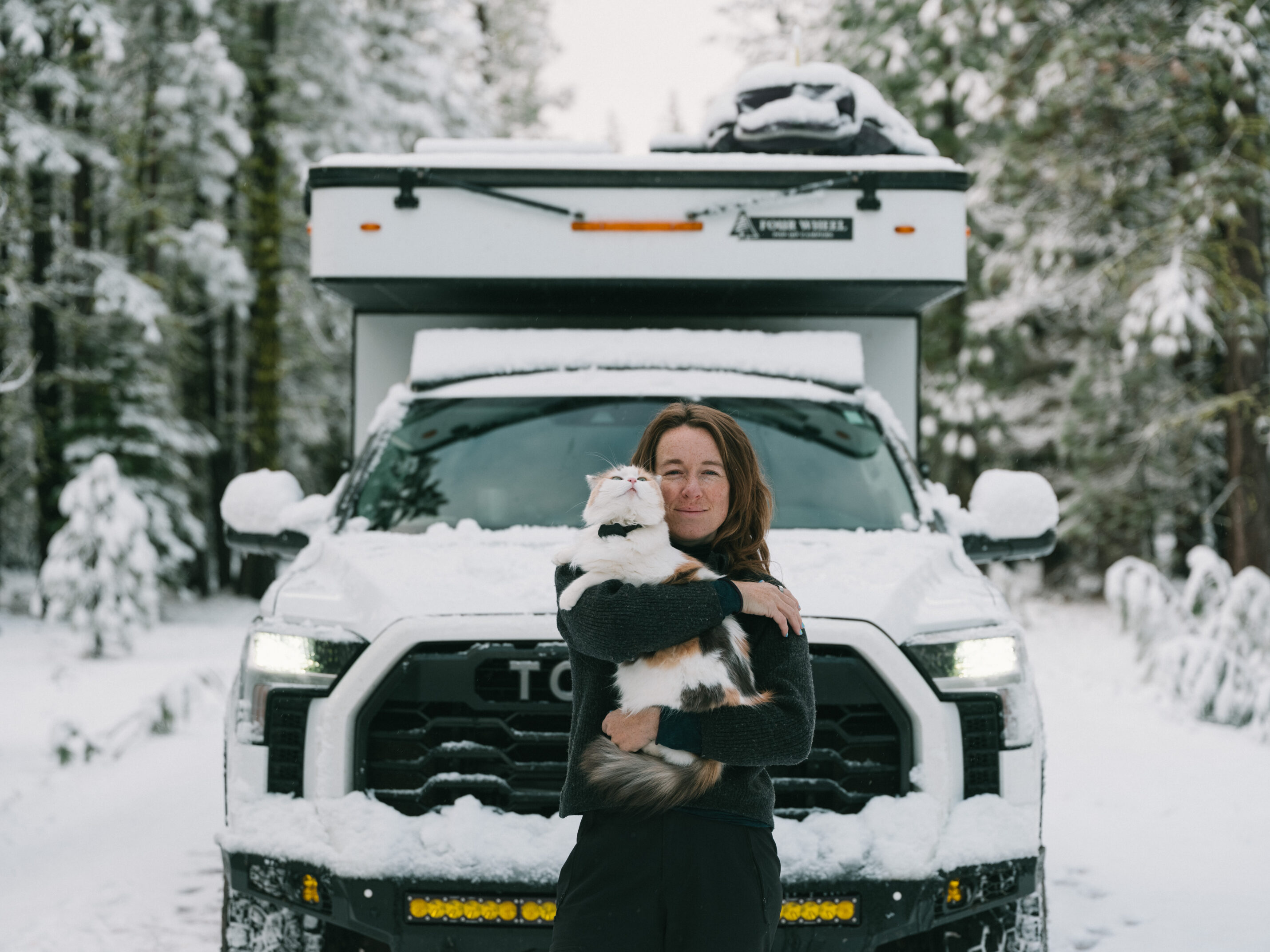
MAK & Boo on winter adventures
5. Use Pet Sitters When Necessary
If you have something planned during your road trip that your pet can’t be a part of, but are stressing about what to do with your pets during that time, look into petsitting options such as a local pet boarding facility or petsitter apps like Rover. Many sitters offer in-home care, which makes dropping and picking up your pet easier if there is a portion of your trip where they can’t come along.
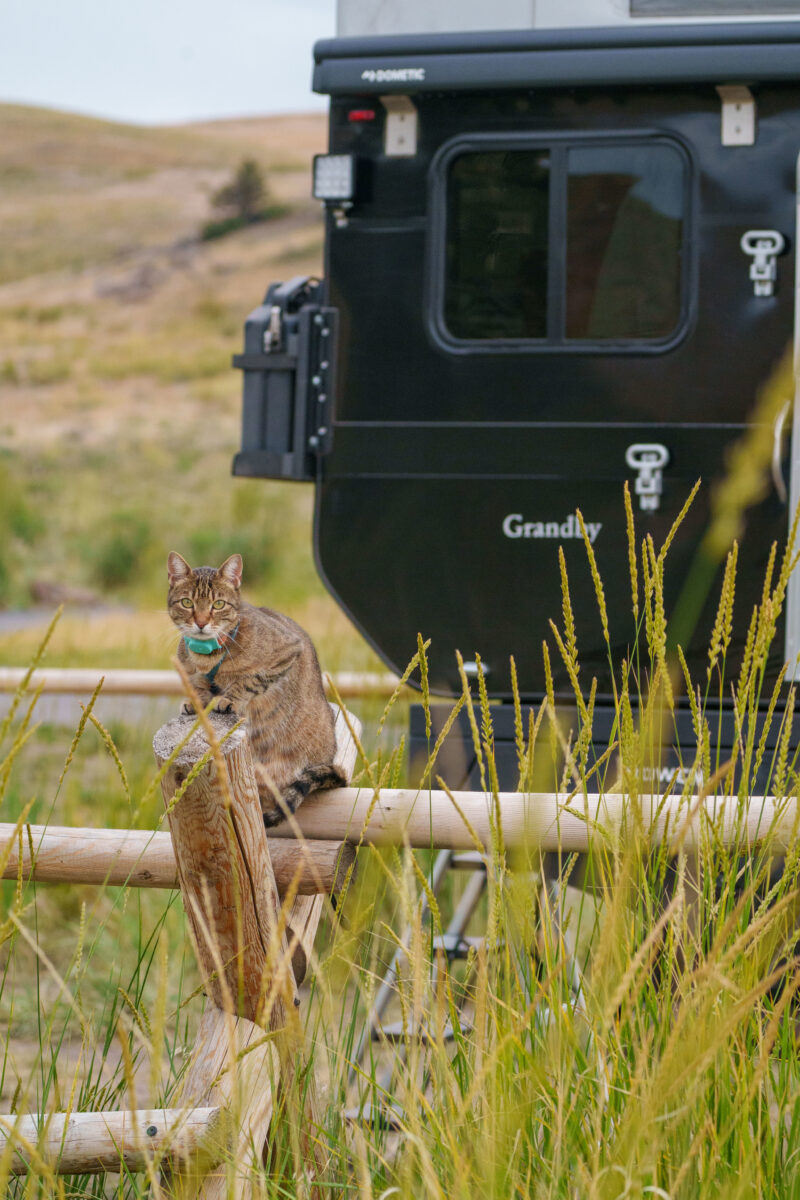
Toby & Twin Living the Grandby Life
6. Pack the Pet Essentials (and Then Some)
Yes, food, water, and leashes are a given—but don’t forget the extras that can make a huge difference on the road:
- Pet tracking collar (e.g., Airtag or Tractive GPS) – These trackers work as long as you are in cell coverage.
- Calming treats – This helps with pets who are anxious travelers or who can easily get car sick.
- Collapsible food & water bowls – If you plan to go hiking, these are a must!
- Doggy bags – You know why!
- Natural litter or pine pellets – If you are traveling with cats, a natural litter can be much easier to manage than other options.
- Portable fence or outdoor enclosure – If your dog or cat shouldn’t be trusted to hang out around camp or picnic areas without a leash, think about purchasing a portable fence to set up at camp. For smaller animals, an enclosed mesh tent or large crate might be the best option to keep them safe while also letting them enjoy the outdoors.
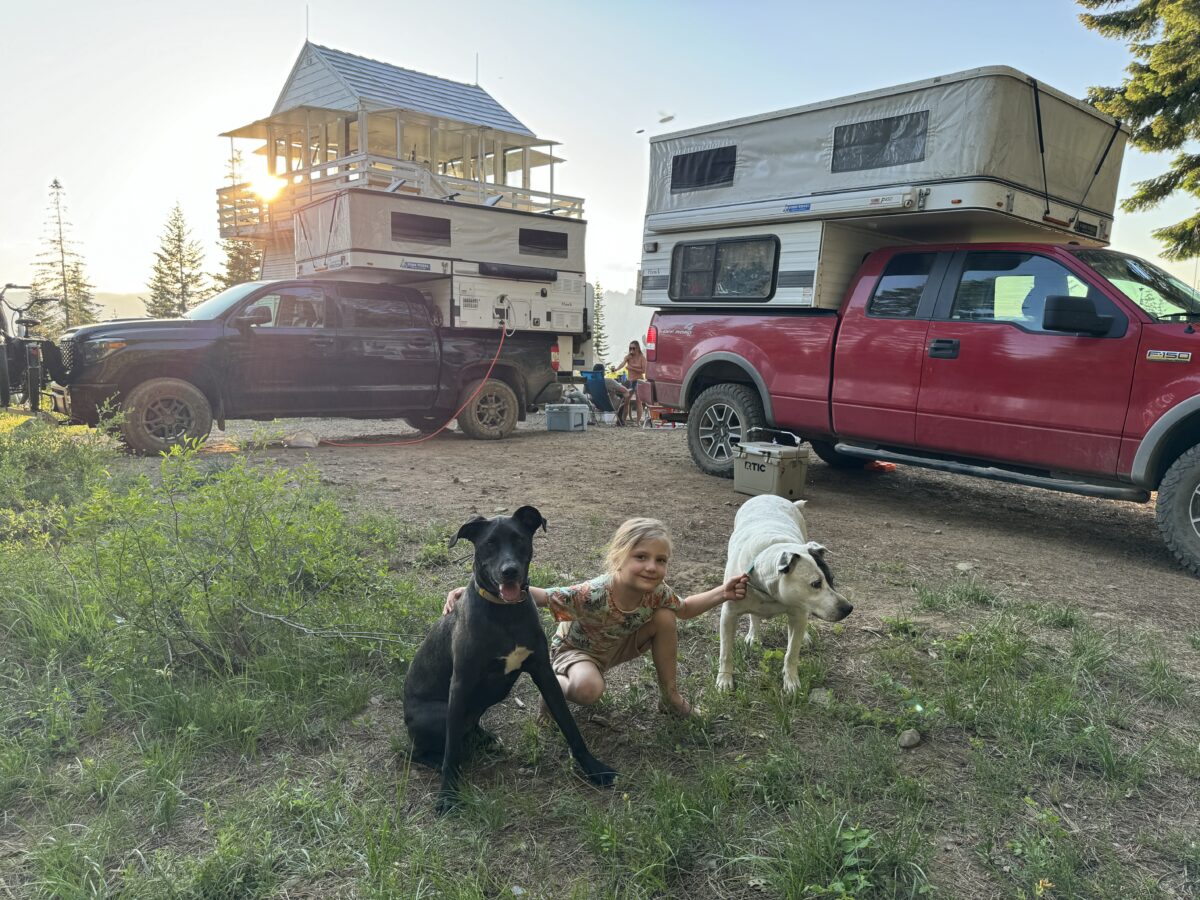
7. Look at the trip through the eyes of your pet
What kind of environment does your pet thrive in? What aspects of the trip will they enjoy? Are there any they won’t enjoy? For example, if you have a dog that barks a lot at people, you won’t want to book the crowded campground where there will be people activity passing by for most of the day. When planning stops, take a moment to think about where your pet will be & how they will handle the situation.
8. It’s OK if You Decide They’ll Be Happier at Home
If you’re looking at your route and there’s a lot of logistical areas or stress factors for your pet, remember it’s okay to leave them at home with a sitter. Even if we want to bring our beloved pets everywhere with them, there are certain times they’ll be happier at home, and that’s okay!
Pets are family, and it’s always the best time when they can join in on an adventure! If you plan to head out on lots of road trips with your furry best friends and don’t have a pop up camper yet, consider investing in a more comfortable set up for them. Start here, with exploring our truck camper models.
Happy trails (and tails)!
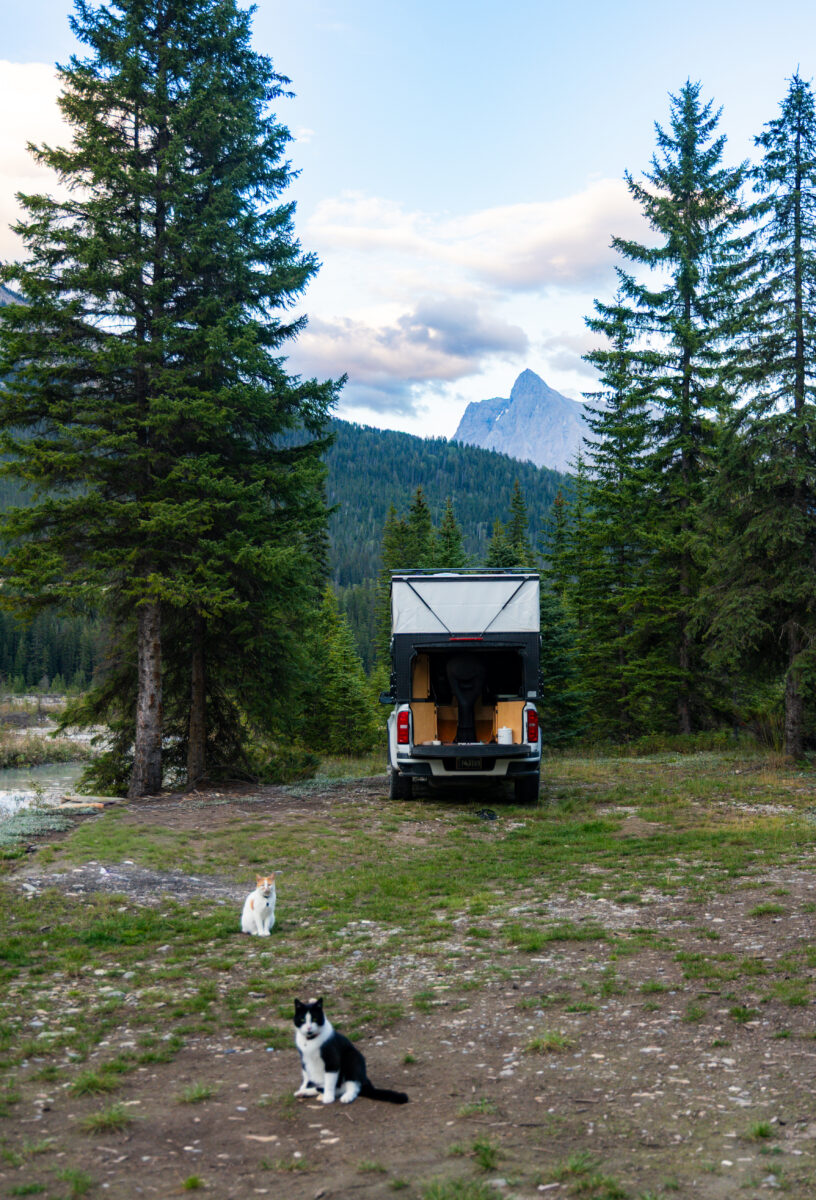
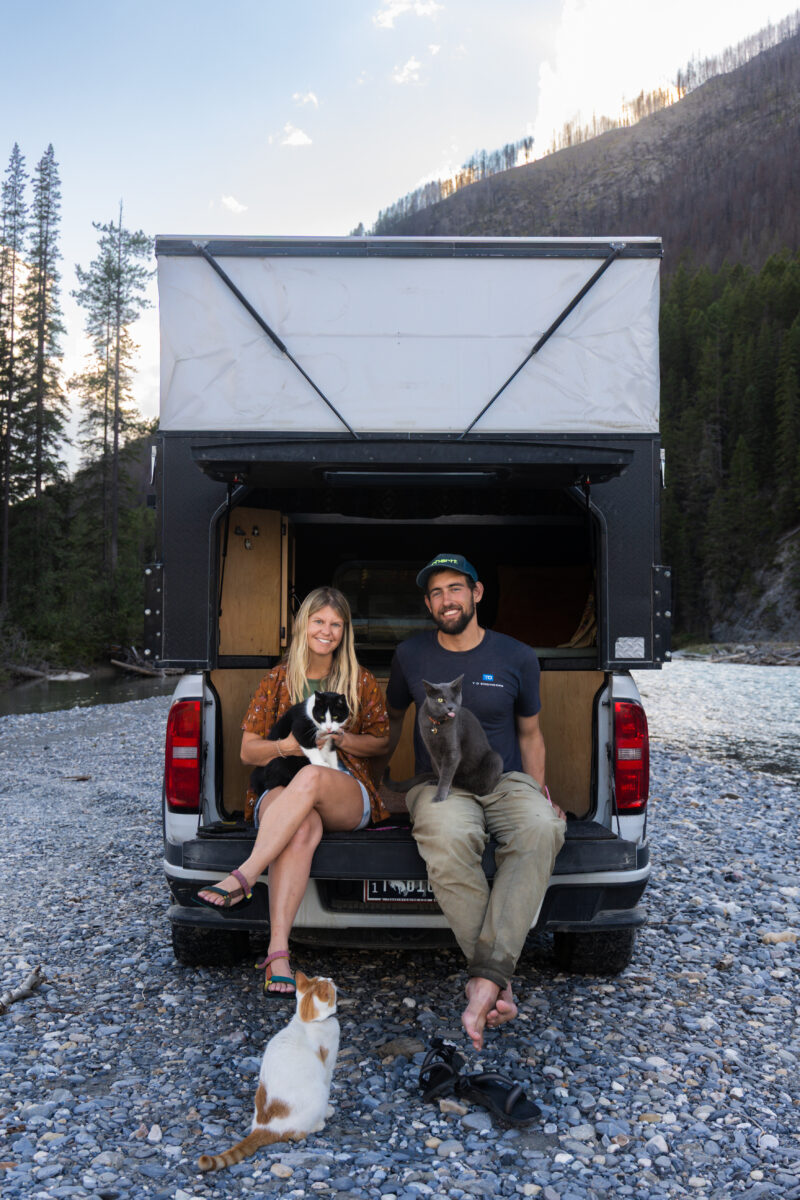
Adventure cats Maverick, Aspen, and Tortilla