


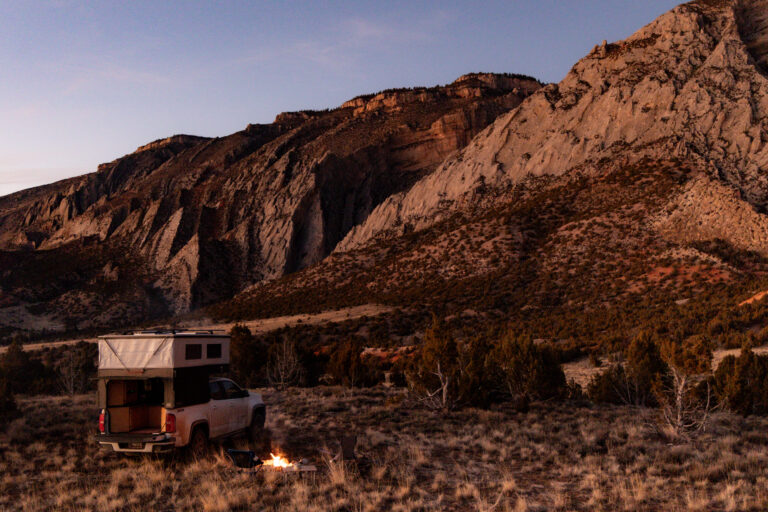
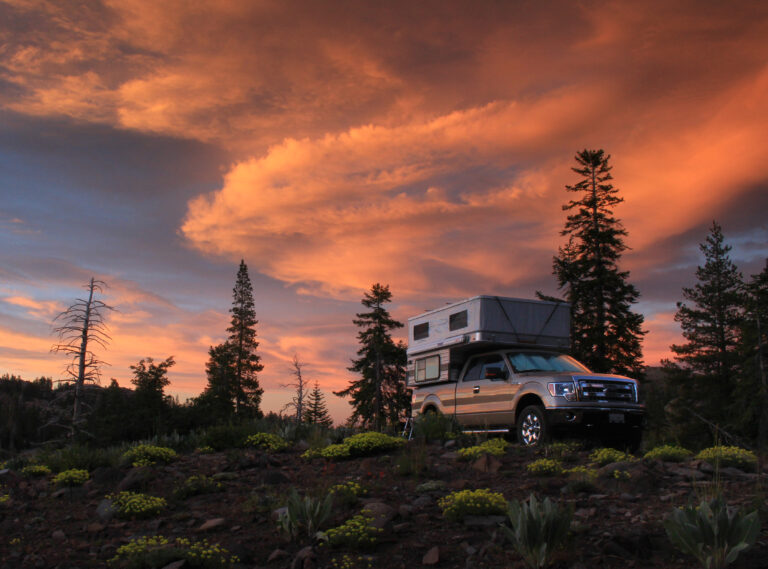




What is The Weight of a Pop Up Camper?
Published Date: September 14, 2026
By Shalee
It's one of the first questions almost every truck camper shopper asks us: how much does a pop up camper actually weigh? It's a fair question, and an important one, because the answer determines what truck you need, how your rig handles on the road, and how much gear you'll actually be able to carry once the camper is loaded up.
The short answer is that pop up camper weight varies a lot depending on size, materials, and options, but it's almost always dramatically lighter than a hard side camper. Here's what actually goes into that number, and how to think about weight before you buy:
Pop Up Camper Weight Ranges
Pop up truck campers generally weigh less than traditional hard side campers because of their fold down design and lighter materials. Weight varies by model, size, and truck fitment, but here's a general breakdown:
- Pop up truck toppers (mount to bed rails, use the truck bed as the floor): roughly 375 to 500 lbs dry
- Midsize pop up slide-in campers (5.0′ to 6.5′ beds): roughly 950 to 1300 lbs dry
- Full size pop up slide-in campers (5.5′ to 8′ beds): roughly 1,050 to 1600 lbs dry
- Pop up flatbed campers: roughly 1,300 to 1800 lbs dry, and up to around 2,000 lbs for extended off-grid builds
For comparison, hard side truck campers commonly weigh 2,500 to 4,500 lbs or more wet, which is why they typically require a three quarter ton or one ton truck, often with a dually rear axle. A lightweight pop up camper, on the other hand, is one of the only camper styles that lets a half ton or even a midsize truck carry a fully featured setup without maxing out payload!
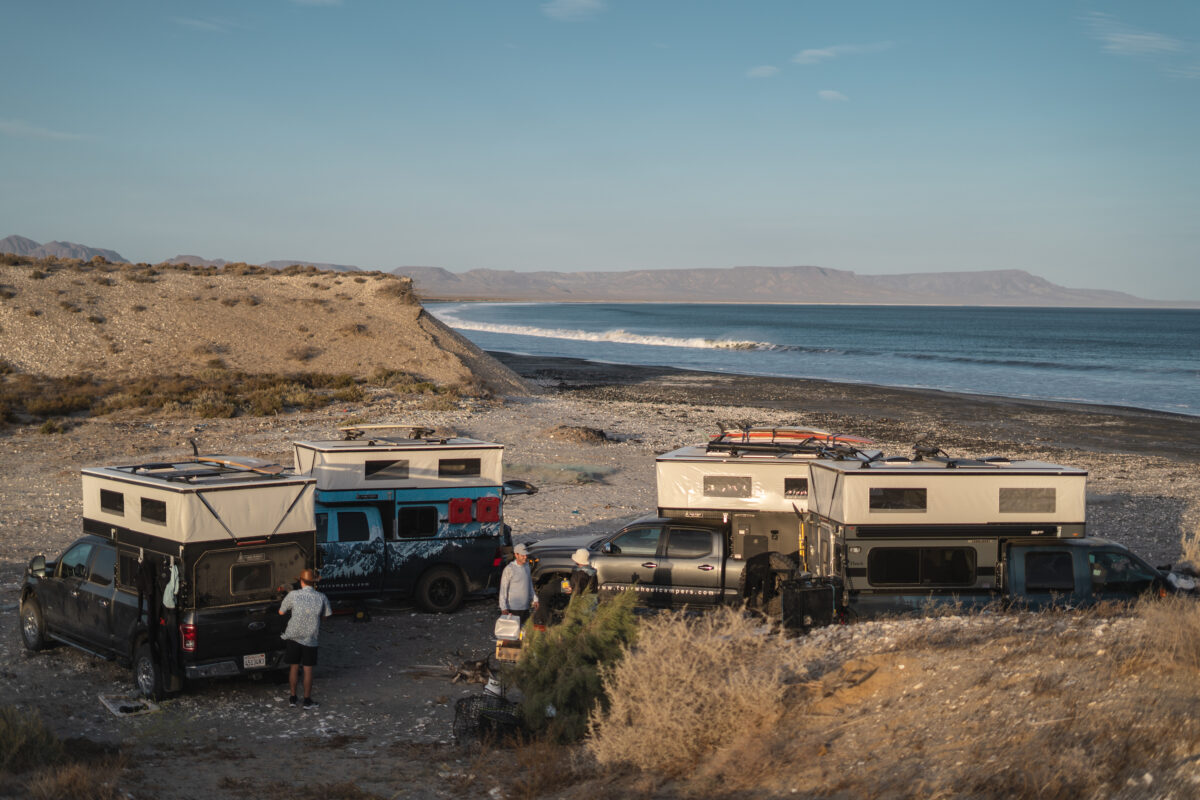
Why Pop Up Campers Weigh So Much Less
The weight difference comes down to design. A pop up camper's roof lowers for travel and raises at camp, with soft, insulated fabric sides connecting the roof to the hard lower walls. That fold down roof means there's simply less rigid material to haul around compared to a hard side camper, which needs full height walls, roof, and framing no matter what.
A few other factors keep pop up campers light:
- Aluminum framing. A welded aluminum frame is significantly lighter than steel while still being strong enough to handle rough roads.
- One piece aluminum roofs. These add durability and weatherproofing without the added weight of a fiberglass or composite hard roof.
- Lower profile. Because the camper sits low with the roof down, there's less overall structure and material used compared to a camper built at full height from the start.
This is also why pop up campers tend to drive better. Less weight, especially less weight carried up high, means a lower center of gravity, better handling in crosswinds, less body roll on uneven terrain, and noticeably better fuel economy than a taller, heavier hard side unit.
Dry Weight vs Wet Weight: What the Spec Sheet Doesn't Tell You
The weight listed on a spec sheet is the dry weight, meaning the base camper with standard equipment and nothing else loaded in. Once you actually pack for a trip, the real number climbs fast:
- Fresh water weighs about 8.3 lbs per gallon, so a full 20 gallon tank adds roughly 167 lbs
- Food, gear, clothing, tools, and recreational equipment commonly add 300 to 500 lbs more
- Passengers riding in the truck also count toward your total load
The benefit of our truck campers is that we include batteries, add-ons, etc, in the dry weight listed, so you don’t have to worry about it!
But it’s good to know that a camper with a 1,200 lb dry weight can easily become a 2,000 lb load once it's watered up, packed, and ready to roll. That's why dry weight alone is never the full picture, and it's also why understanding your truck's actual payload capacity matters just as much as the camper's weight! We go deeper on how payload capacity works and what it means for your specific truck in our guide, What Is Payload Capacity?
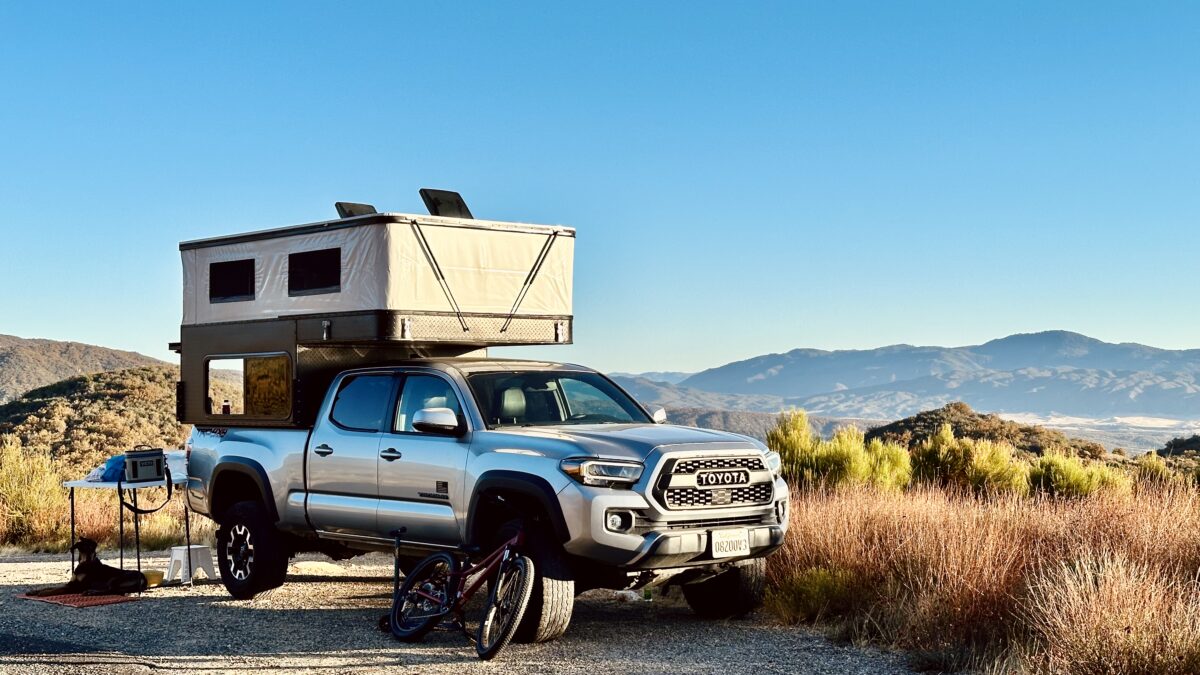
How Camper Weight Affects Your Truck Choice
Camper weight and truck class go hand in hand. As a general rule:
- Midsize trucks (Tacoma, Colorado, Canyon, Ranger, Gladiator) pair well with lightweight pop up toppers and midsize slide-ins, since their payload capacity typically runs from around 1,050 to 1,685 lbs depending on configuration.
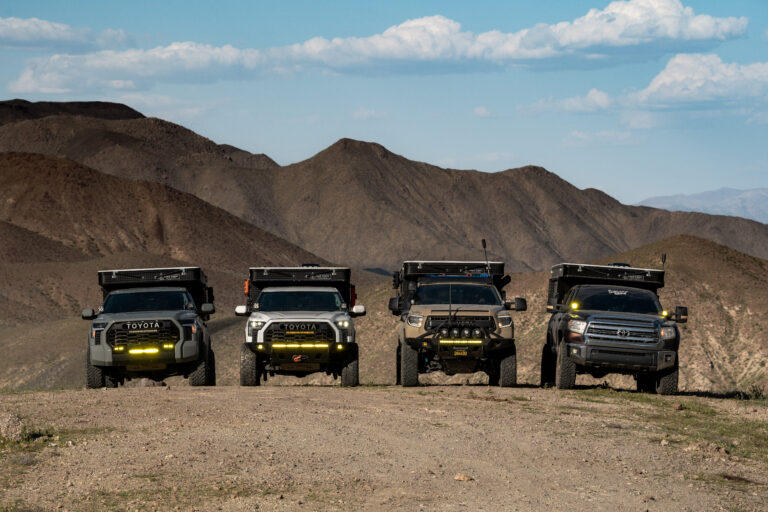
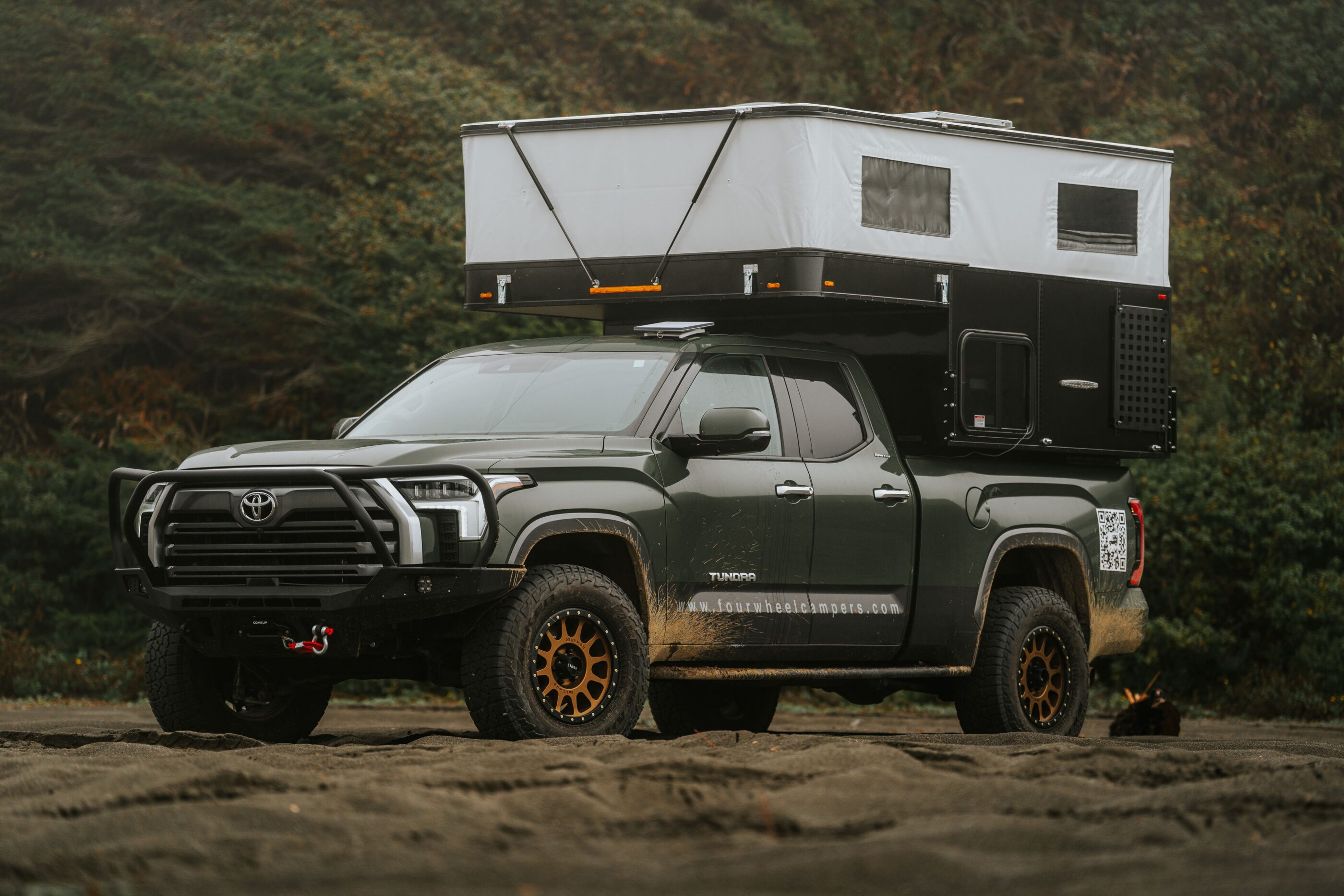
- Half ton trucks (F-150, Silverado 1500, Ram 1500, Tundra) can typically handle a full size pop up slide-in comfortably, with payload capacities ranging widely from roughly 1,600 to over 3,000 lbs depending on trim and drivetrain.
- Three quarter ton and one ton trucks open up the largest slide-in and flatbed models, along with the heaviest off-grid builds.
Payload capacity is always specific to your exact truck, not just the model in general. You'll find it on the yellow and white sticker inside your driver's side door jamb, and factors like cab style, drivetrain, and factory options can shift that number by hundreds of pounds even within the same model year. If you're still working out which camper fits your specific rig, our guide on how to choose the right Four Wheel Camper for your truck walks through that process in detail, and our truck selector tool can match you with compatible models based on your exact truck.
Choosing the Right Weight for How You Camp
More weight generally means more amenities, more water and power capacity, and more room to spread out, but it also means less payload headroom and a rig that's a little less nimble on rough roads. Less weight means better fuel economy, easier handling, and more flexibility on your truck, but with a smaller footprint and fewer built in features.
A pop up truck topper like our Project M, starting around 375 lbs, is the lightest way into truck camping and keeps your truck bed usable for hauling gear during the week. A midsize slide-in like the Swift or Fleet adds a full kitchen and sleeping setup while still staying light enough for a Tacoma or similar truck. A full size slide-in like the Hawk or Grandby adds more room and comfort for trucks with the payload to support it. And for serious off-grid travel, models like our Hawk+ trade some weight for significantly more water and power capacity, built specifically for extended stays away from resupply points.
If you're weighing that tradeoff for your own build, our guide on how to make your camper off-grid ready breaks down how power, water, and storage needs affect overall weight and what to prioritize based on your trip length.

The Bottom Line: Four Wheel Campers Weigh Between 375 and 2000lbs
Pop up camper weight ranges from around 375 lbs for a lightweight topper up to roughly 2,000 lbs for our largest flatbed models, a fraction of what a comparable hard side camper weighs. That weight advantage is exactly why pop up campers work on trucks that could never safely carry a traditional hard side unit, and why they tend to drive better, get better fuel economy, and handle rough roads with more confidence.
Before you buy, always check your specific truck's payload capacity, do the math on your fully loaded weight including water, gear, and passengers, and choose the camper that fits comfortably within that number rather than right at the edge of it. If you want help running those numbers for your exact truck, use our Build & Price tool on any model page, or reach out to our team and we'll help you find the right fit.
Frequently Asked Questions About Pop Up Camper Weight
How much does a pop up truck camper weigh on average?
Most pop up truck campers weigh between 375 and 2000lbs dry, depending on size and style. Lightweight toppers start around 375 lbs, midsize slide-ins run 950 to 1,050 lbs, full size slide-ins run 1,050 to 1,300 lbs, and larger flatbed models can end up weighing close to 2,000 lbs. Keep in mind these are dry weights, and your actual loaded weight will be higher once you add water, gear, and options.
Is a pop up camper lighter than a hard side camper?
Yes, significantly. Pop up campers typically weigh 1,000 to 3,000 lbs less than a comparable hard side camper, since hard side units have full height rigid walls and roofs regardless of size. This weight difference is why pop up campers can fit on trucks, including many half ton and midsize models, that could never safely carry a hard side camper.
Does a pop up camper's weight include water and propane?
No. The weight listed on a spec sheet is the dry weight, meaning the empty camper with no water, propane, or gear loaded. A full 20 gallon fresh water tank alone adds roughly 167 lbs, and propane, batteries, food, and gear can easily add another 500 to 900 lbs on top of the dry weight. Always calculate your fully loaded weight, not just the dry weight, when checking it against your truck's payload.
What truck do I need for a pop up camper?
It depends on which camper you choose. Lightweight toppers and midsize slide-ins typically work well on midsize trucks like the Tacoma or Colorado, while full size slide-ins generally need a half ton truck or larger. The real answer comes down to your specific truck's payload capacity compared to your camper's fully loaded weight, which is why checking your door jamb sticker before choosing a camper is so important.
Can a half ton truck carry a pop up camper?
Yes, in most cases. Half ton trucks like the F-150, Silverado 1500, Ram 1500, and Tundra typically have enough payload capacity for a full size pop up slide-in camper, especially with a well equipped configuration. This is one of the biggest advantages of a lightweight pop up design over a hard side camper, since hard side units usually require a three quarter ton or one ton truck to carry safely.