Tackling Dinosaur NM’s Echo Park by Truck Camper
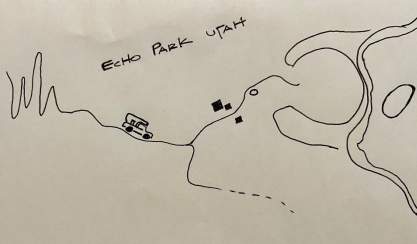
A rough map of Dinosaur National Monument’s Echo Park doesn’t look like much but don’t let that fool you. Start by drawing several zig-zags that extend into a long tail that opens up into a horseshoe. At about three quarters of the length, add a few small squares on either side of the tail followed by a bird wing and cone. Finally, draw a meandering line that closely follows the radius of the horseshoe and continues on. The result is a rough map that reflects the less than smooth entrance to Echo Park but begs for exploration.
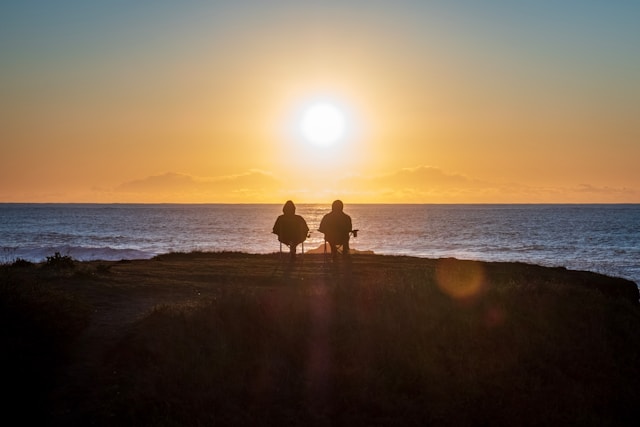
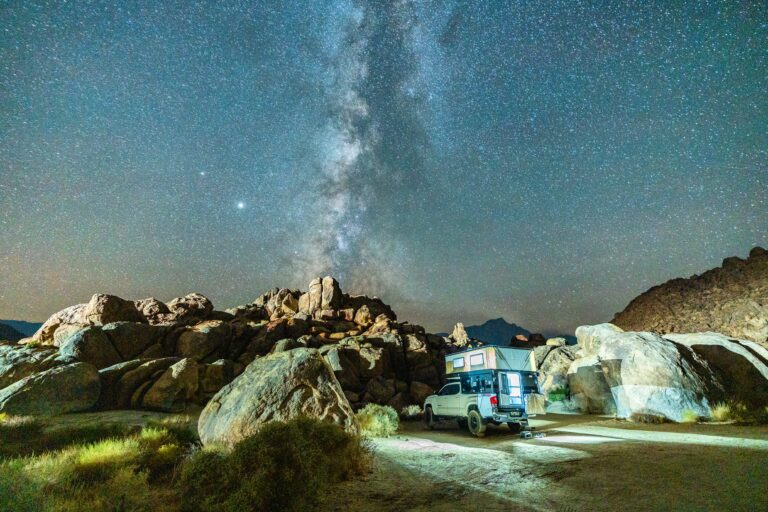
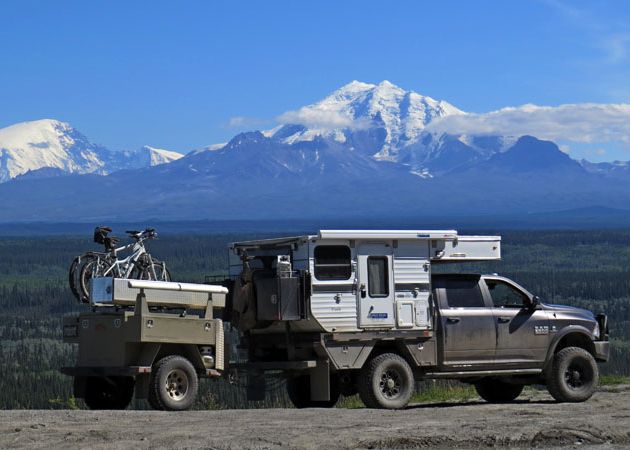
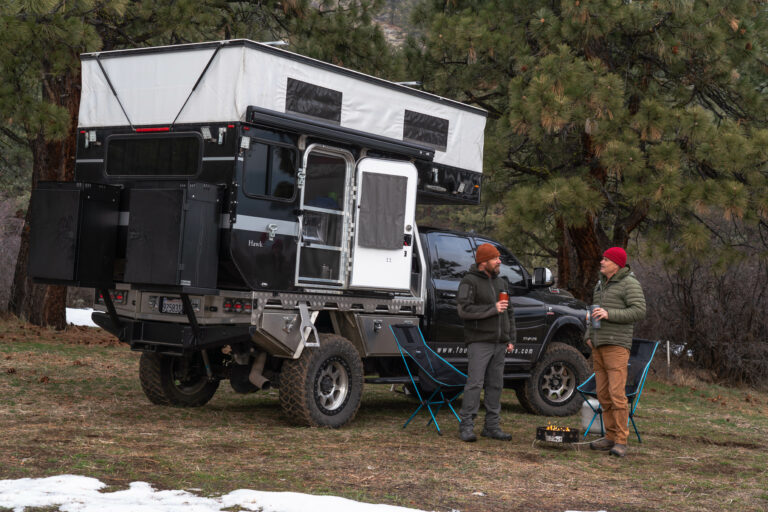
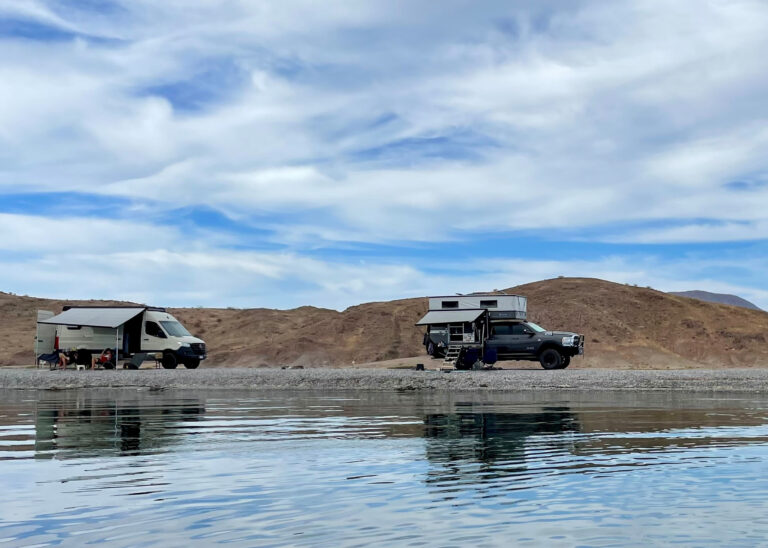
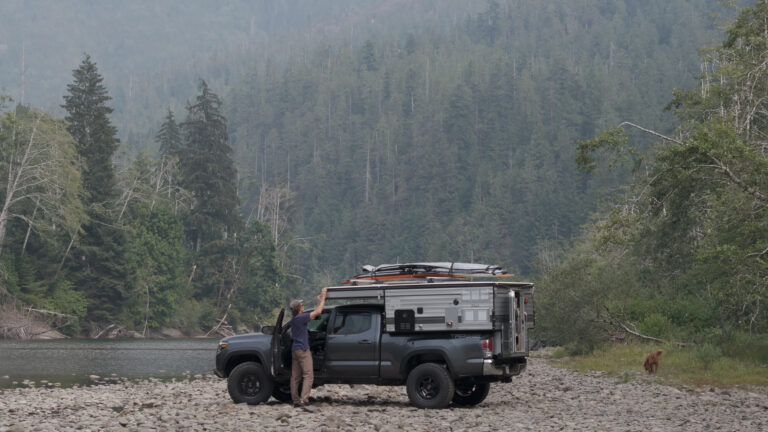
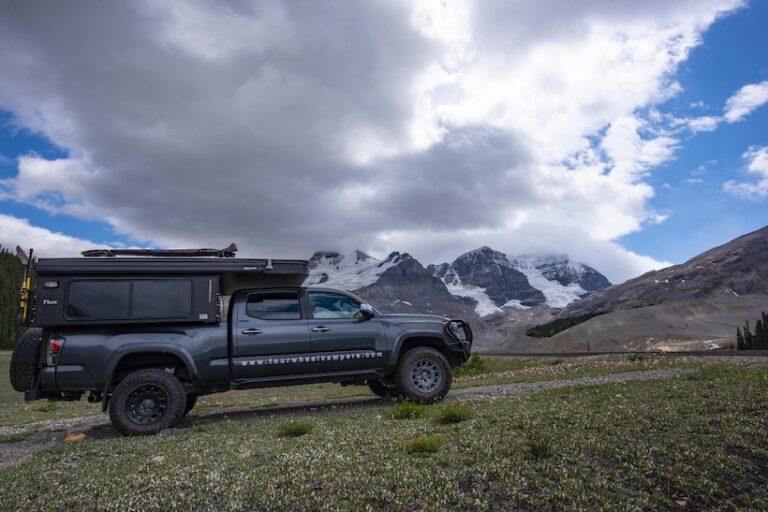
When traveling in our Four Wheel Camper Flatbed Hawk, Gretchen and I rarely stay in one location more than a day. That trend must have originated from our backpacking days when we were always on the move. Over the years, we have explored, and are drawn back, to a handful of places that never disappoint. Echo Park is one of those special places that makes us hit the pause button.
During our first visit, we reveled in the scenic drive through Sand Canyon and the historical Chew Family ranch and homestead. There are numerous petroglyphs to interpret, caves to explore and trails to hike.
Rafting on the Green River is both a participation and spectator sport in Echo Park. Simply stated, the Park checks a lot of boxes and the access is
just inconvenient enough that solitude is your friend.
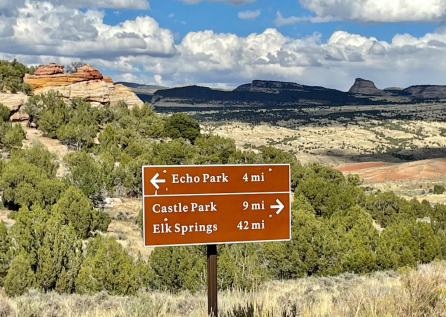
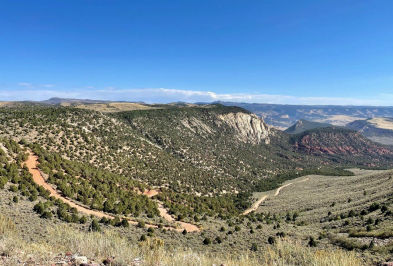
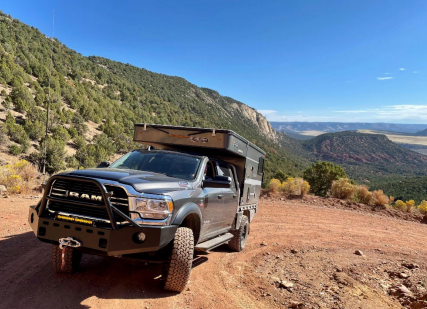
Echo Park, Utah is located in the lesser-known north-east corner of Dinosaur National Monument near the Colorado border. It is 40 miles to the nearest gas station or six-pack depending on your preference. But the adventure begins at Canyon Overlook. From this ridge-top viewpoint much of the 12-mile road down [and into] Echo Park can be traced as it winds through valleys, benchtops and canyons.
The “zig-zag,” known as the Dugway, can look formidable from above. A sign stating “Impassable when wet” bares truth. The steep gradient and red clay road can be very slick after a rainfall. Be sure to check the weather forecast before departing. That caution aside, the Dugway is generally in good shape and well suited for truck campers, adventure vans or AWD sedans. I always air down for better traction and a smoother ride. Trailers are not recommended as the switchbacks are tight and the road is narrow in spots. (On two of the switchbacks, I had to momentarily disengage 4WD in my Dodge Ram to prevent driveline chatter). Once down the 2-mile Dugway, the “tail” on your drawing, or the rest of the road, is a combination of gravel with a few sandy spots and a couple of tirecleaning creek crossings.
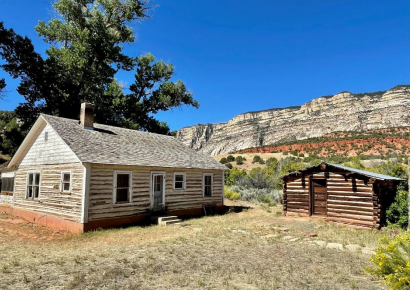
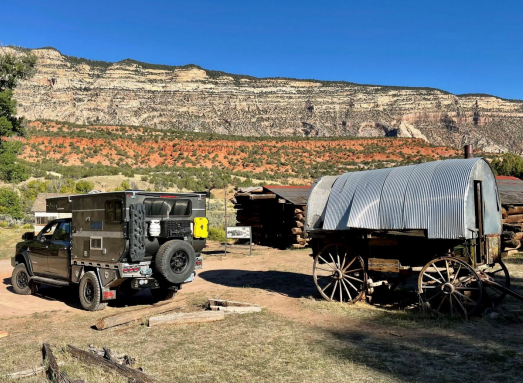
At mile point 8, there is an intersection which marks the direction to Echo Park. The “Small Boxes” or the Chew Family Ranch is just 3 | Four Wheel Pop-Up Campers another mile down the road. Founded in 1910 by Jack Chew, the ranch was owned and operated by the family for three generations until it was sold to the National Park Service in 1966. Located near Pool Creek, the Chew’s had a year-round water source in addition to timber and grazing land. Besides the homestead, there are numerous outbuildings including a barn, workshop and root cellar. On the ranch is an old shepherd’s
wagon—the original overlanding vehicle!
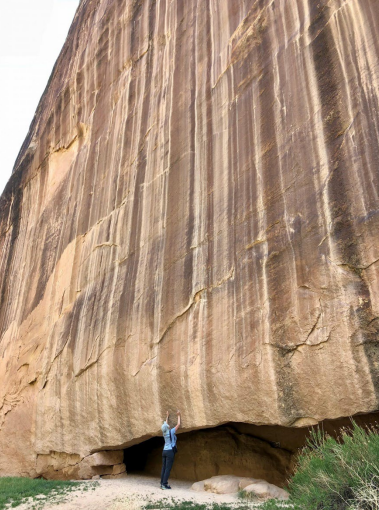
Another mile down the road are “winged” petroglyphs visible high upon the canyon walls. They were carved into the rock by the Fremont Indians at a time when the canyon floor was thirty feet higher. Adjacent to the wall carvings is Whispering Cave. This is where the “horseshoe” of Echo Park begins. In the distance, “conical” Steamboat Rock is the official park greeter. The walls of Echo Park tower several hundred uninterrupted feet from the floor.
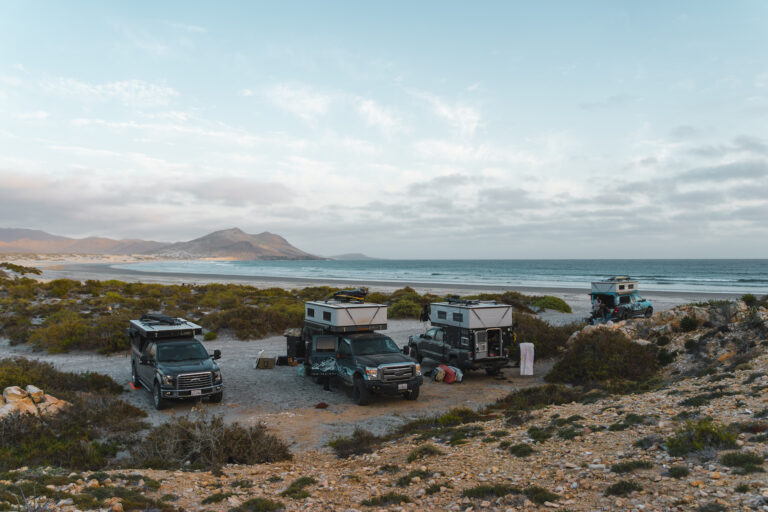
Within and around the “horseshoe” there are 22 campsites. Since Echo Park resides within the a national monument, dispersed camping is prohibited—but do not let this deter you from staying there. Each of the sites have a generous footprint and plenty of elbow room. Four of the campsites are nestled in the trees just a stone throw from the Green River.
They provide a cozy camping experience and relief from the
hot summer sun but can be a little cool on the cusps. If you tend to travel in the spring and fall, like we do, site selection can be important if you prefer morning or late afternoon sunshine. It is fascinating to watch the shadow line slowly ascend or descend the horseshoe walls depending on the time of day and campsite location. One moment, you may be basking in the afternoon sun and the next reaching for a sweatshirt or lighting a campfire. Depending on your power needs, a portable solar panel, which can be moved during the day, can be very beneficial.
Echo Park is remote. There is no cell or Internet service anywhere
near the area, but there is a seasonal camp host, with radio communications, that resides at a ranger cabin nearby in case of an emergency. If you need to be connected, we have seen Starlink Internet used successfully in the campground.
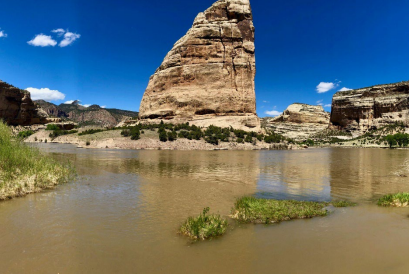
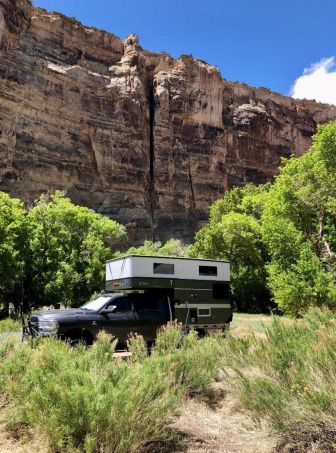
Mule deer and bighorn sheep can often be seen roaming through the park while bird species are abundant. An easy hike upstream meanders through grass fields and wildflowers to the confluence of the Green and Yampa Rivers. Downstream, a more technical trail leads to Mitten Fault Park. Views of the river winding through steep canyon walls are always picturesque. Twenty-three sedimentary rock layers, slowly exposed over 25 million years are found within the monument.
Allow about an hour to get in or out of Echo Park. There is an alternative
route to the park (via Elk Springs) but it adds about 40 miles to the journey and is best suited for capable 4WD vehicles. If you are looking for an adventure that checks all the boxes, then visit Echo Park. Bring your map. It will not be long before you are saying ‘I love this place’… place, place, place.
Follow Gary and Gretchen’s Four Wheel Camper Flatbed Hawk adventures on Instagram at @g2offroadagain.