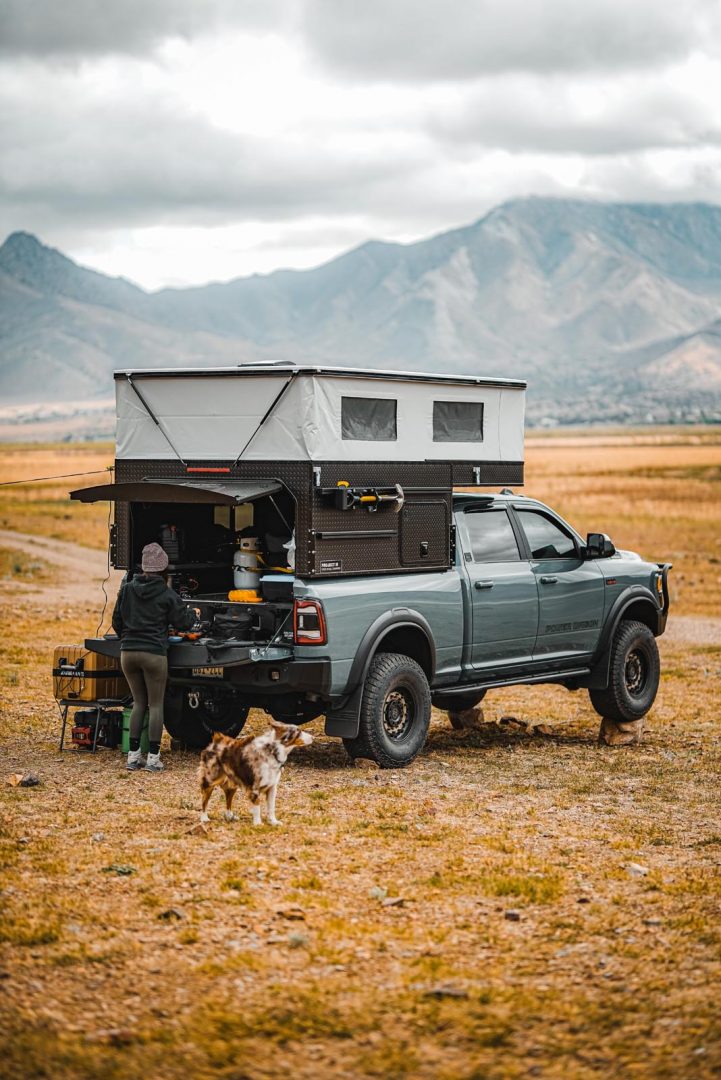
Tips for Staying Safe When Camping Alone
Heading out to camp alone can be both exhilarating and overwhelming! Thousands of people camp out alone every night around the country, and it’s an experience we recommend everyone to try out at least once. However, we understand camping alone is most likely a step outside your comfort zone the first time you do it, so we’ve crafted the ultimate list of how to stay safe when camping alone.
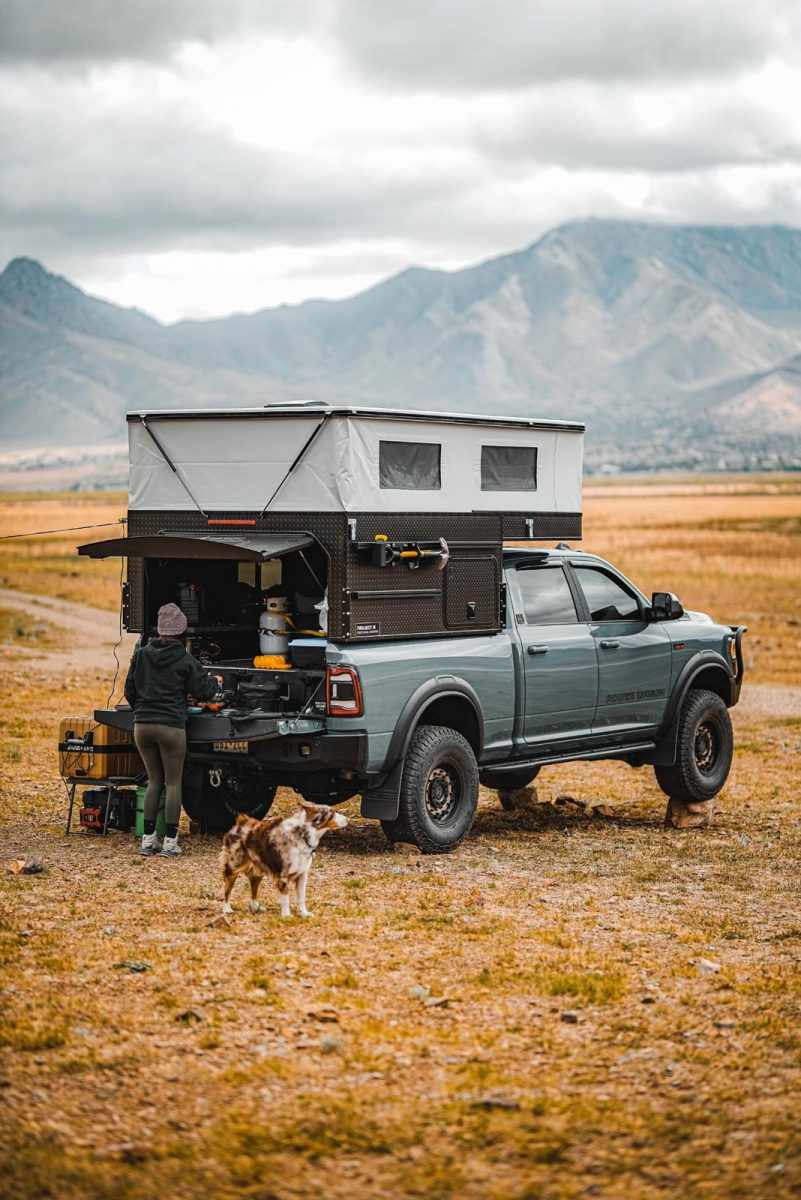
1. Research Camping Spots Before You Arrive
Having a plan ahead of time makes all the difference when camping alone. It can be incredibly stressful scrambling last minute in the dark, at a new location, and without any help/support. Pick a place before you arrive and have a second backup location in your notes, just in case. Try to arrive at your campsite before dusk so you can see it in the daylight and make a judgment call on the location and its surroundings.
2. Download a Camping app
We have an entire guide dedicated to the best apps and websites to use for camping. These apps are incredibly helpful, especially when looking for areas you’ll feel safe camping alone. They often outline details about camping sites, like what cell phone providers get service (if any) and how many people can camp there at once. Previous campers can also leave reviews with photos & help give you a better feel of the area.
3. Keep Safety Essentials Close By
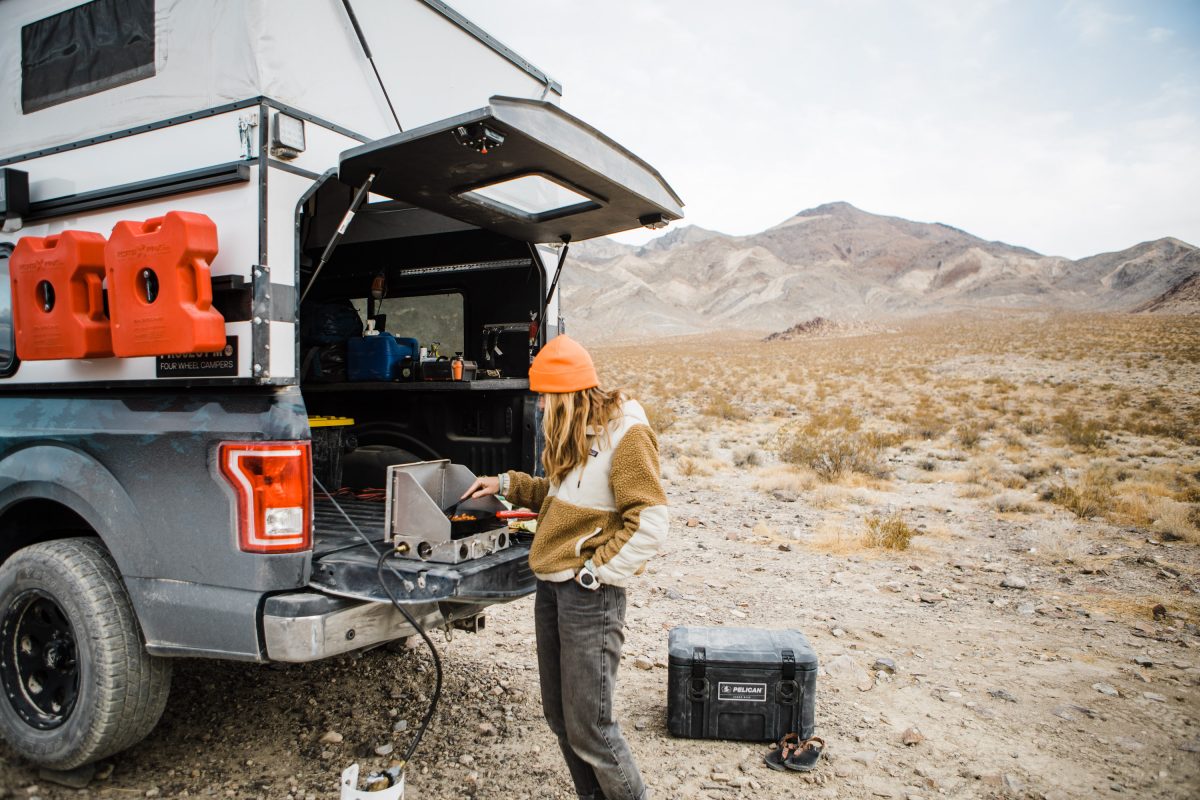
There are so many great camping accessories to help keep you safe and prepared for any scenario when camping alone. Here are just a few:
- Bear spray/pepper spray
- Camping knife
- Shovel
- Traction mats
- Coat/Gloves/Hand Warmers
- Camping Stove
- Extra Lighters
- Headlamp
- External battery
4. Trust Your Gut
When in doubt, move on. If you arrive at a location that doesn’t feel right or where you don’t feel comfortable, do not feel obligated to stay there! There are probably plenty of other campgrounds and places to camp nearby, and it’s wild how much changing a campsite or location can completely alter how comfortable and relaxed you feel.
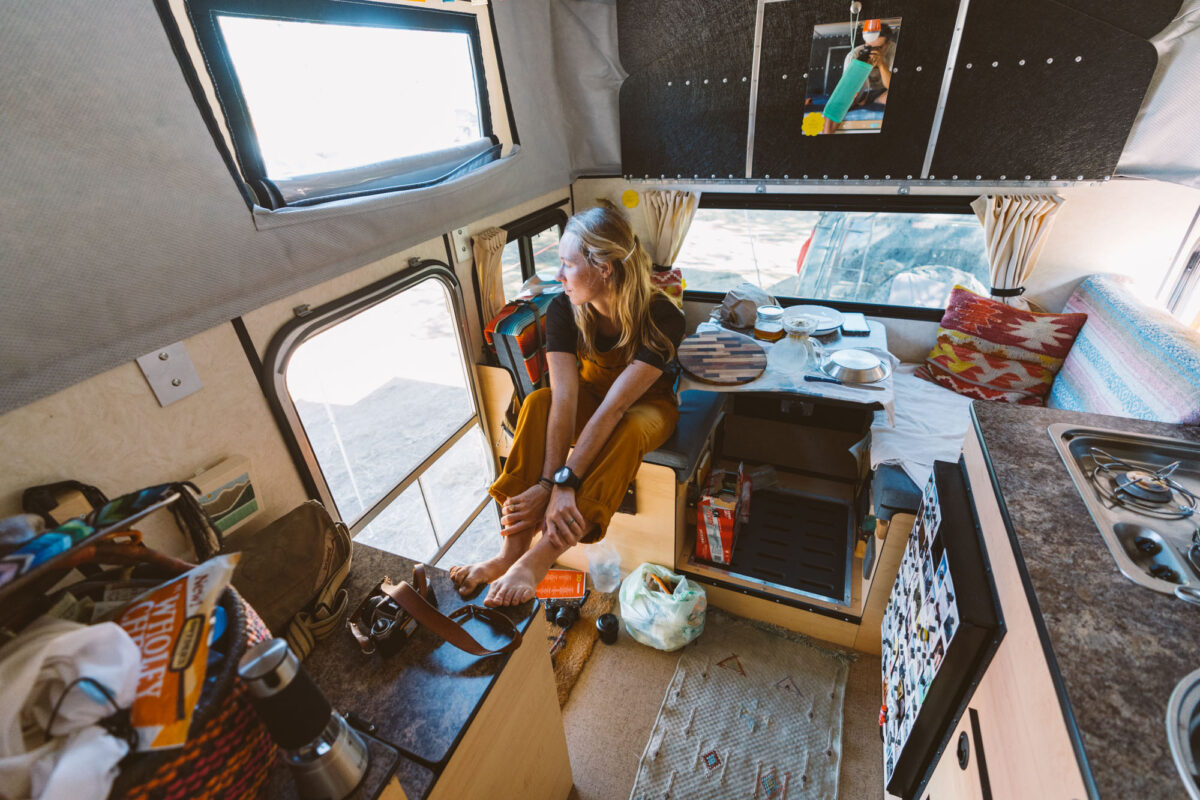
5. Text Family & Friends Updates
Keeping friends or family updated on your whereabouts helps you but also gives your loved ones piece of mind. Text them updates often, with GPS coordinates on your campsites. Let them know if you will be out of service and how long you plan to be out of service. This can be a lifesaver if something happens, such as getting stuck or having a flat tire in a remote area. If no one knows where you are when it happens, it will take much longer to get help.
6. Camp in Groups
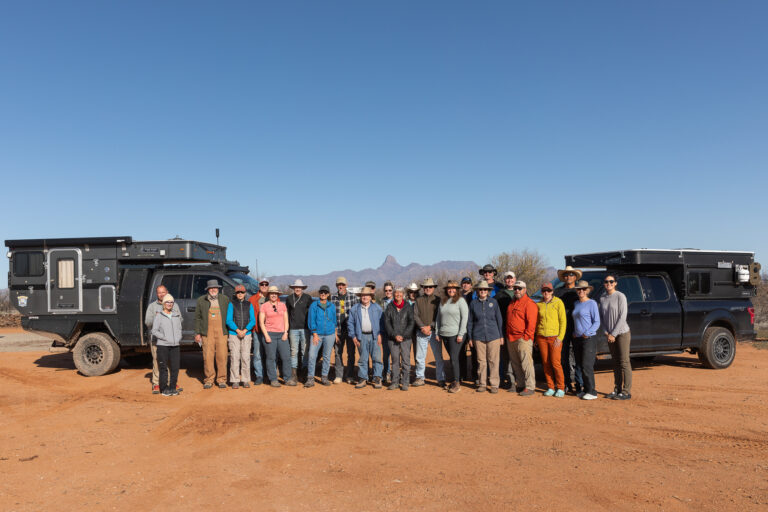
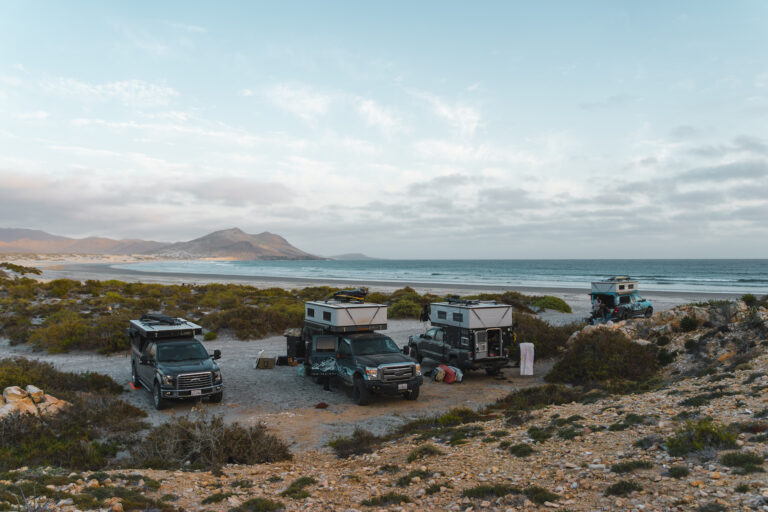
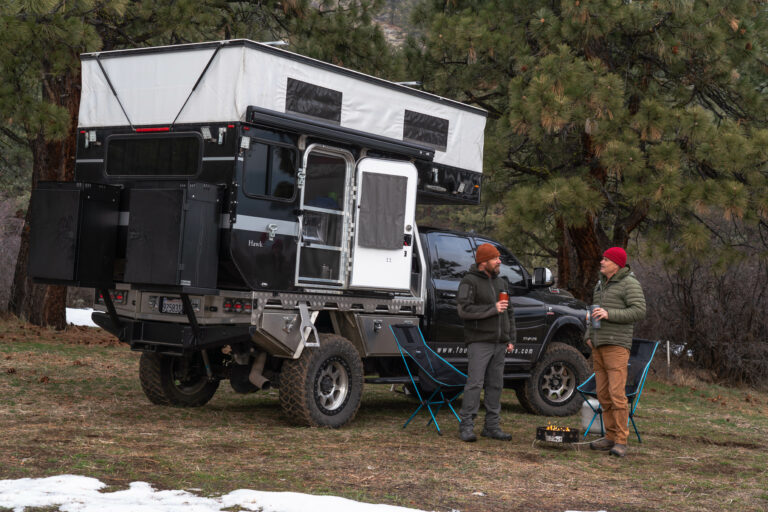
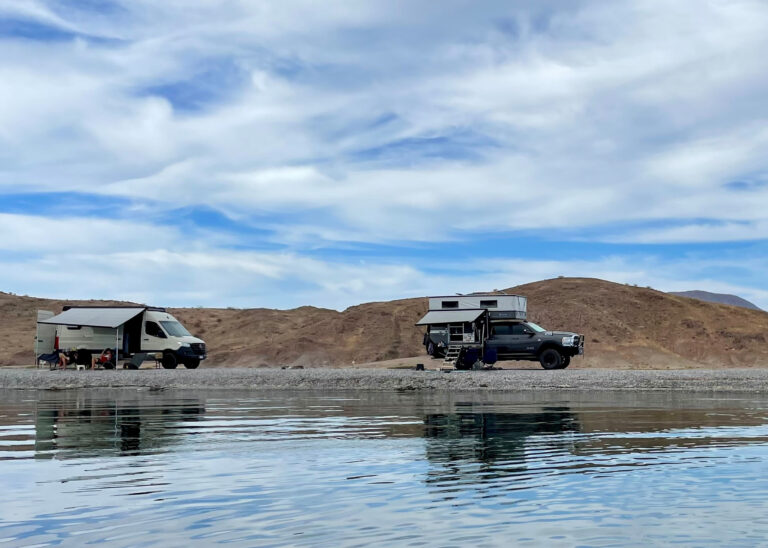
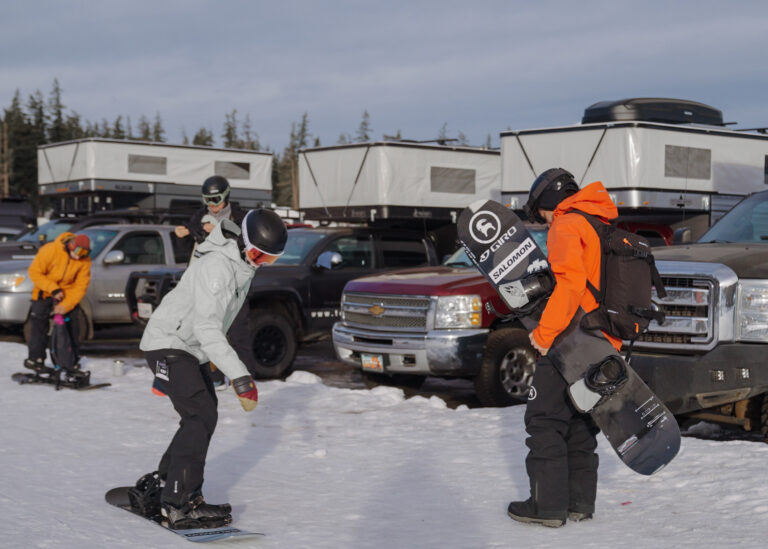
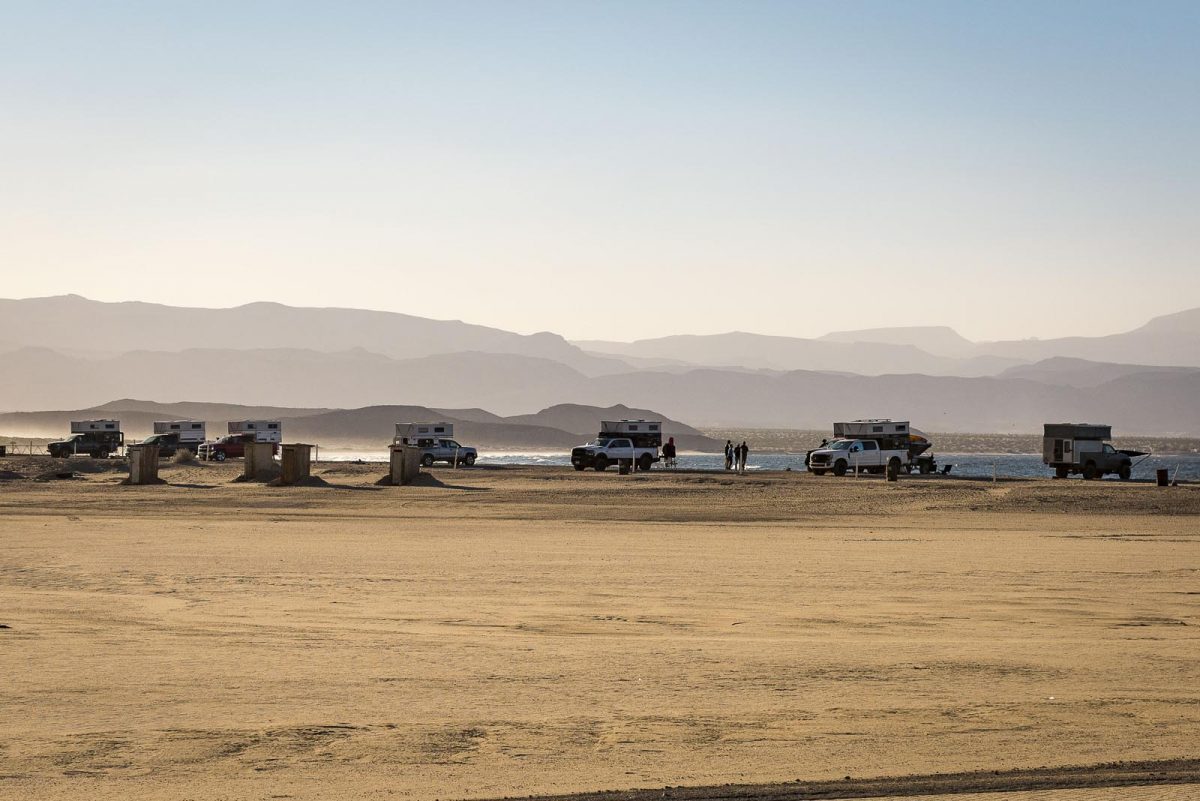
Just because you’re traveling alone doesn’t mean you need to camp alone! If you are alone on the road and are nervous, there are van & truck camper meetups that happen across the country many weekends throughout the year. It is a great way to camp alone while being in a safe & welcoming community. These events are also perfect for making new friends on the road, and it is pretty common for groups to leave the event together and camp out for a few days together somewhere else.
If you’re a Four Wheel Camper owner, our annual meetup is coming up in SoCal December 1st-3rd. Get all the details here.
7. Never Post Your Location in Real-Time
In the age of social media, we often want to share what we’re doing when we’re doing it. When camping alone, it’s best only to share details of where you are until you’ve left and moved on. This is an extra layer of security to ensure that only people you love and trust know your location while you’re there.
8. Keep a First Aid Kit Nearby
Keeping a first aid kit with essentials such as band-aids, burn cream, disinfectant wipes, etc., is always a good idea, especially when by yourself. You’d be surprised how much you’ll use a first aid kit, even if you never get a severe injury! For example, did you know many first-aid kits include bug spray wipes and SPF? That means a first aid kit can rescue you even if you simply forget some vital camping items!
9. Invest in a Garmin InReach
The Garmin InReach is an emergency satellite GPS beacon that adventurers can use to send messages to loved ones in remote locations without cell service. It also acts as an emergency GPS device that can get your exact coordinates to rescuers with a click of a button. They aren’t the cheapest piece of equipment and require a monthly subscription, but the piece of mind when camping alone is well worth the investment.
10. Lock Everything Up
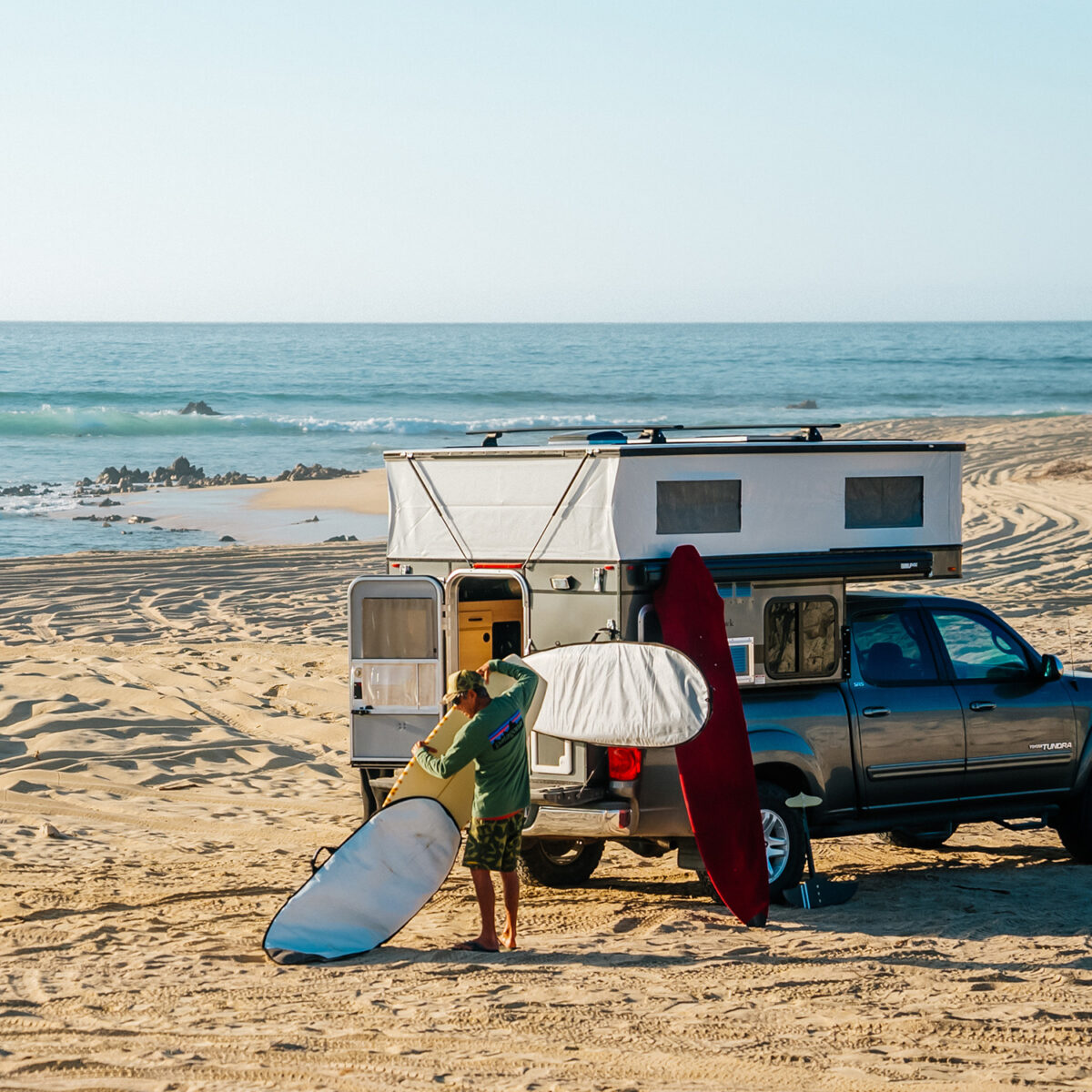
This may seem like a no-brainer, but it is easy to let your guard down when camping! Every night before bed, take a look at your campsite. Put away any food (even closed items) to avoid attracting unwanted nighttime critters. If camping in a tent, ensure any critical belongings are locked in your car. If in a truck camper, check that everything you need is locked in the camper with you and not left in the truck bed.
How to Stay Safe When Camping Alone
We hope you can take these tools and head out feeling confident and excited about the experience! Camping alone is a freeing and fulfilling experience, but we also understand it can be a bit intimidating at first. Having a plan, being well-prepared, trusting your gut, and keeping your family updated are just a few ways to help ensure your time alone is safe, fun, and stress-free. If you currently camp alone in a tent and are looking for a more secure solution, shop our line of pop-up truck campers.
Shop our slide in campers here.
Shop our truck toppers here.
Shop our flatbed truck campers here.